
Curbs
Cracked Curb Flashing
Unit curbs flex with vibration and crack their flashing. It gets rebuilt and reinforced before coating ties into it.
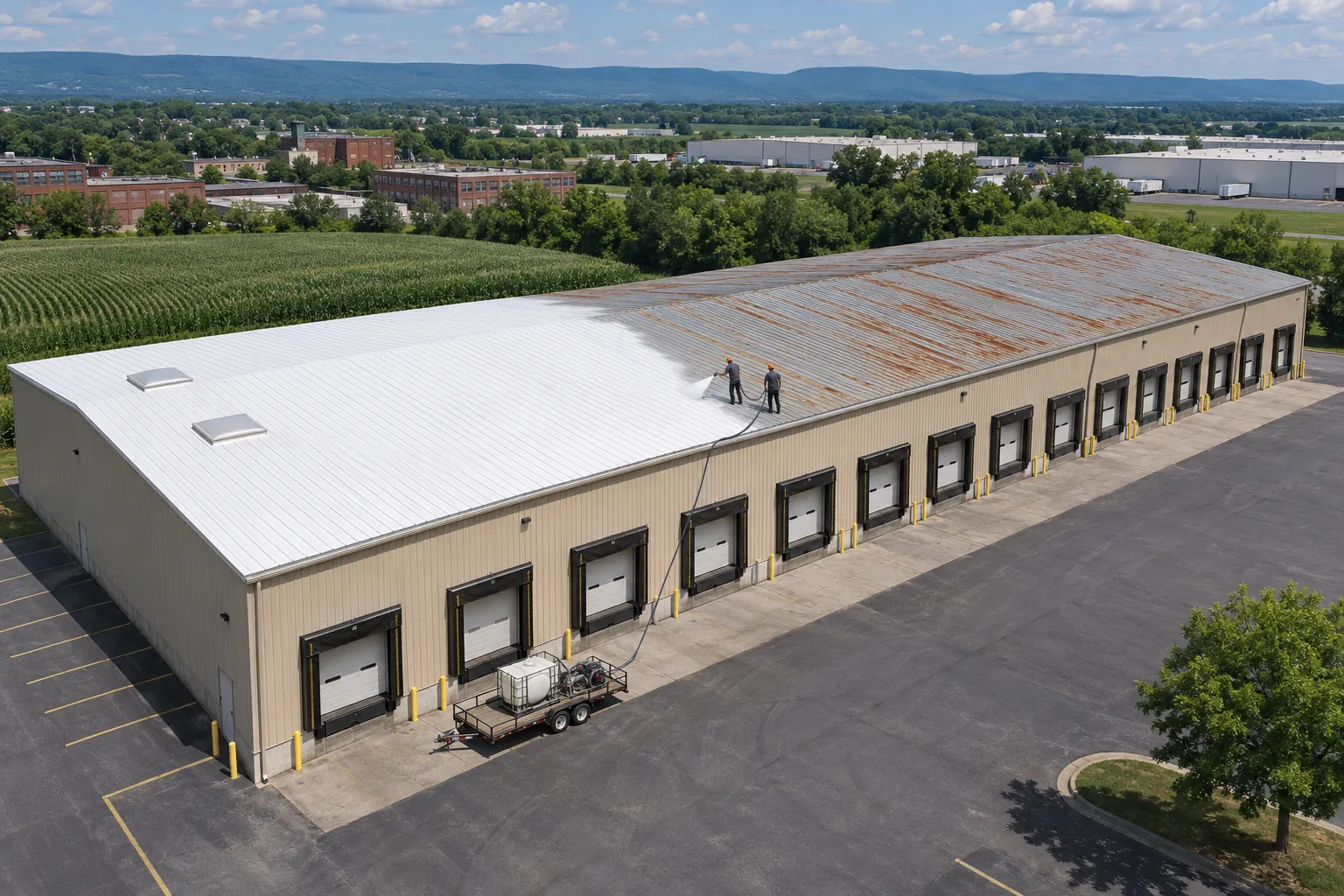
Camp Hill metal roof coating from us covers office roofs crowded with rooftop units, sequencing the work around air intakes and keeping every curb flashing reachable.
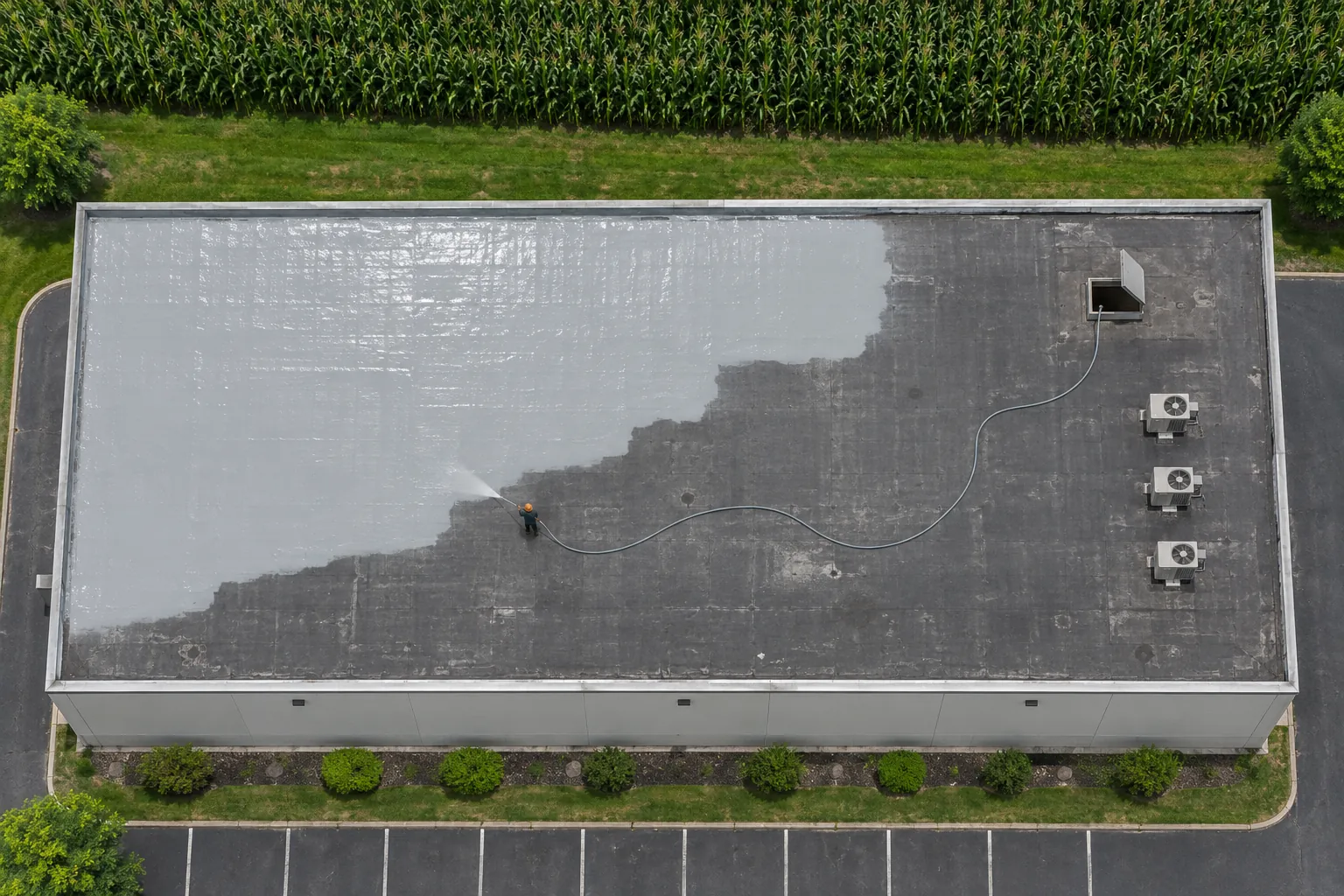
Camp Hill metal roof coating on office buildings revolves around the equipment on top. Air intakes pull outside air into offices, so coating fumes have to stay away from them.
Curbs under each unit carry flashing that leaks when neglected, and a curb tucked behind ductwork can leave a leak point outside an otherwise finished job. We map every unit, curb, and duct before choosing products or setting the work order.
Equipment-heavy roofs leak at a predictable set of places.
Unit curbs flex with vibration and crack their flashing. It gets rebuilt and reinforced before coating ties into it.
Hoods close to the roof leave little room to work. We plan access so the flashing beneath gets full attention.
Pipe and duct supports pierce panels at odd angles. Each one gets a boot or sealed collar.
Technician routes wear coating near equipment. Walk pads and marked paths protect them after the work.
Coating an equipment-heavy roof tightens the spots where office leaks usually start.
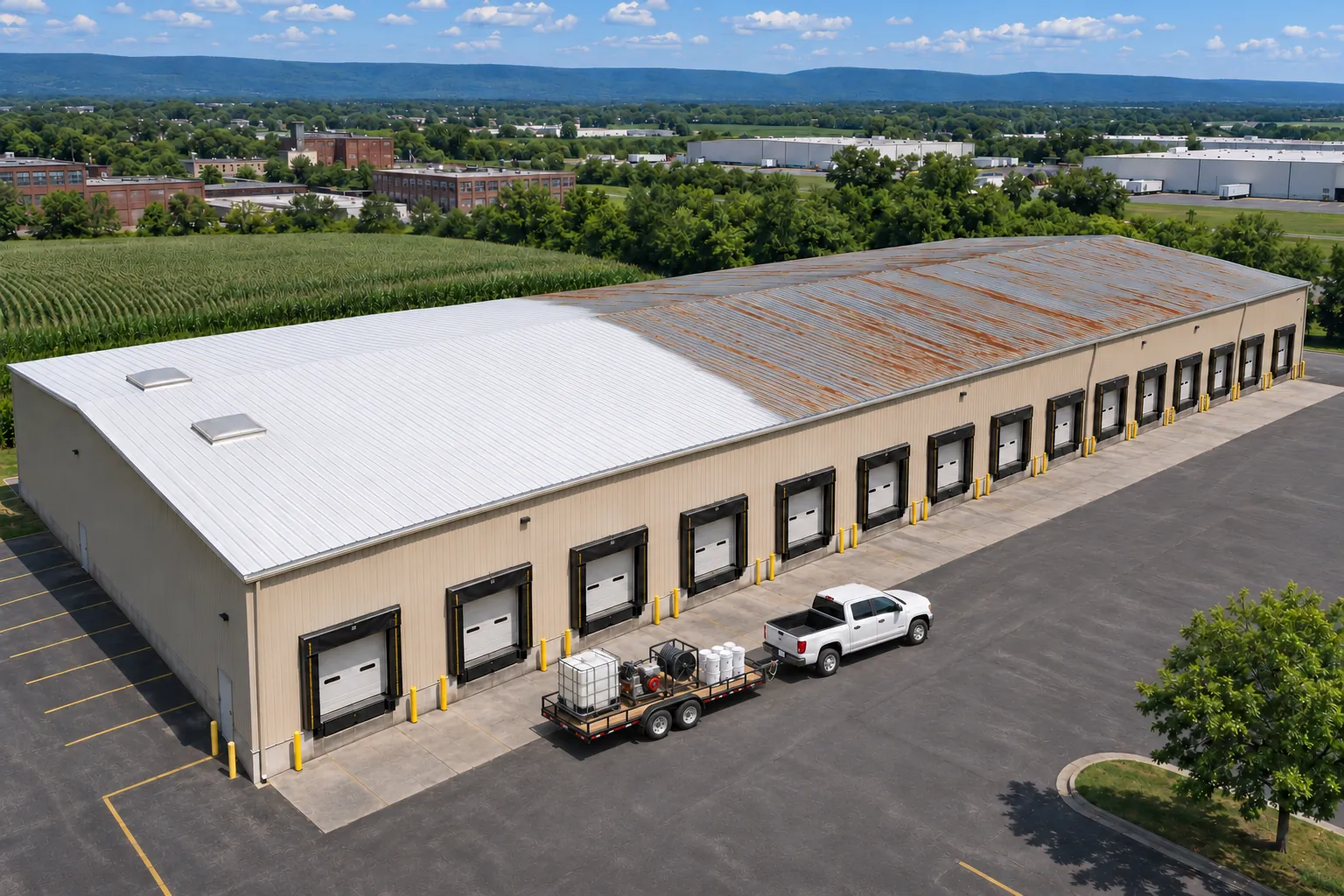
Reinforced curb flashing tied into the coating removes the most common source of ceiling drips on these roofs. Curb flashing is also where vibration from the units does the most damage.
Offices with many units get a single coated surface between them instead of dozens of separate patches. Patches around curbs get replaced by flashing tied into the full roof coating.
A light roof surface runs cooler around intakes in summer, so equipment draws less heated air from the roof. Cooler panels around units also mean less heat buildup near the equipment.
Routes and pads keep technicians on protected paths, so the coating lasts near the equipment. Service paths are laid out with your HVAC vendor so they follow real routes.
Coating choices on equipment roofs follow the panel type, the drainage around curbs, and the traffic.
Pitched metal between equipment takes a primed acrylic system with fabric at every curb and lap. Laps near equipment get fabric where vibration works them loose.
Water collecting on the uphill side of curbs gets silicone, which handles the standing water. The water sitting behind curbs points to where crickets or added slope would help.
Service routes get granules set in the topcoat for grip and wear resistance. Granule paths lead from the hatch to every unit that gets regular service.
When a unit is replaced, the new curb is flashed and coated to match the rest of the roof. New curbs get flashing that matches the coating system already on the roof.
Call us and describe where it drips. We will check the curb flashing and the duct penetrations above that spot first.
Four steps, coordinated with the people who run the building's HVAC.
Panels, curbs, ducts, and intakes get mapped, and every flashing around equipment is checked and photographed. Stains inside get matched to the units above them.
Intake shutdowns, covers, and work order are set with building staff so fumes stay outside, and your HVAC vendor gets the schedule.
Curb flashing, duct boots, and support collars are repaired and reinforced before field coating, with fabric set into each corner.
Coating goes on between and around units, with service paths finished in a granule-coated wear surface leading from the hatch.
Our coverage reaches these towns plus Harrisburg. Farther out? Call us or leave a message.
Warehouses where old patches come off before seams are rebuilt.
Office roofs where rollers replace spraying whenever wind picks up.
Roofs where the worn slope gets coated and the other is documented.
Warehouse roofs where tool drops and foot traffic set the plan.
What office managers ask about equipment and coating.
Enough room for preparation, application, and coordination with building operations. We review intake locations and the proposed products before setting the work order. Flashing around every intake has to stay reachable, or a hidden curb leaves an important leak detail outside an otherwise complete project.
Many do. Roofs with several units collect patches around each curb, and coating ties those details into one surface once the flashing is rebuilt. Rooftop units with leaking curbs often show it as stains on ceilings directly below.
The planning range is about $2.50 to $4.00 per square foot of roof. Curbs, ducts, and penetrations add detail labor, so equipment count moves the price within that range. Roofs with many units take more labor per square foot than open metal fields.
Yes. We share the schedule with your HVAC service company so shutdowns, unit moves, and curb work happen in the right order. Unit moves and curb changes then happen before coating, so nothing new pierces it later.
Rain driven against a unit runs down its housing onto the curb, and a cracked curb flashing or open duct seam lets it in. Condensate lines that drain onto the roof add more water at the same spot.
We trace the path from the stain upward and repair the curb, the duct seams, and the drain line together. New curbs flashed now can be coated with the rest of the roof in one job.
If a unit is due for replacement soon, doing it first saves reflashing a new curb into fresh coating. We ask about planned equipment work at the inspection. Intakes far from the work area stay running, and only nearby ones get covers.
Get a planning range from your roof area, or call to have the curbs and intakes checked first.