
Equipment
Condensers Beside The Roof Edge
Ground and roof units near the work area need covers or a no-spray zone so coating never lands on coils.
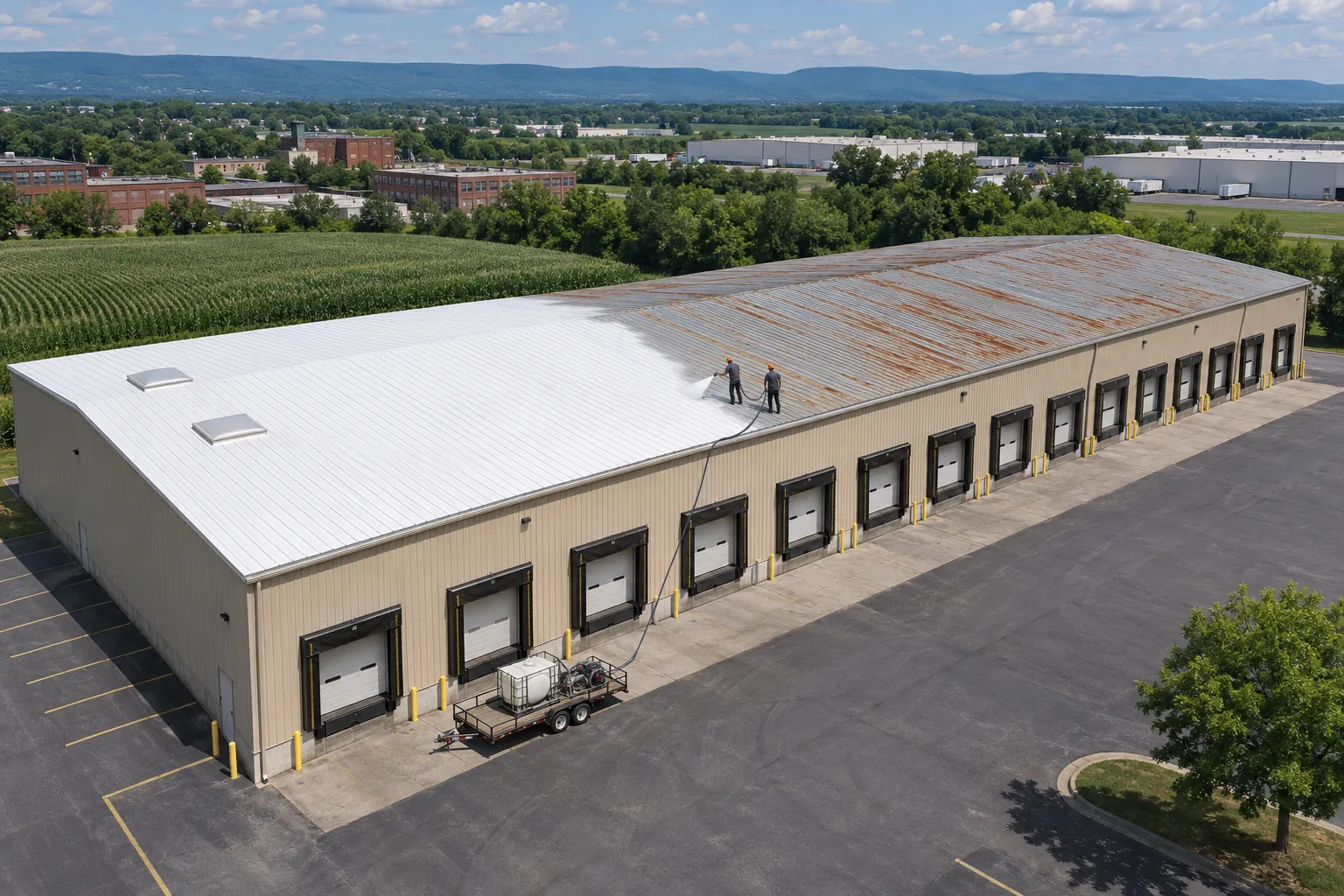
Mechanicsburg metal roof coating from us suits occupied office buildings, with protection plans for parked cars and equipment and work hours agreed with tenants.
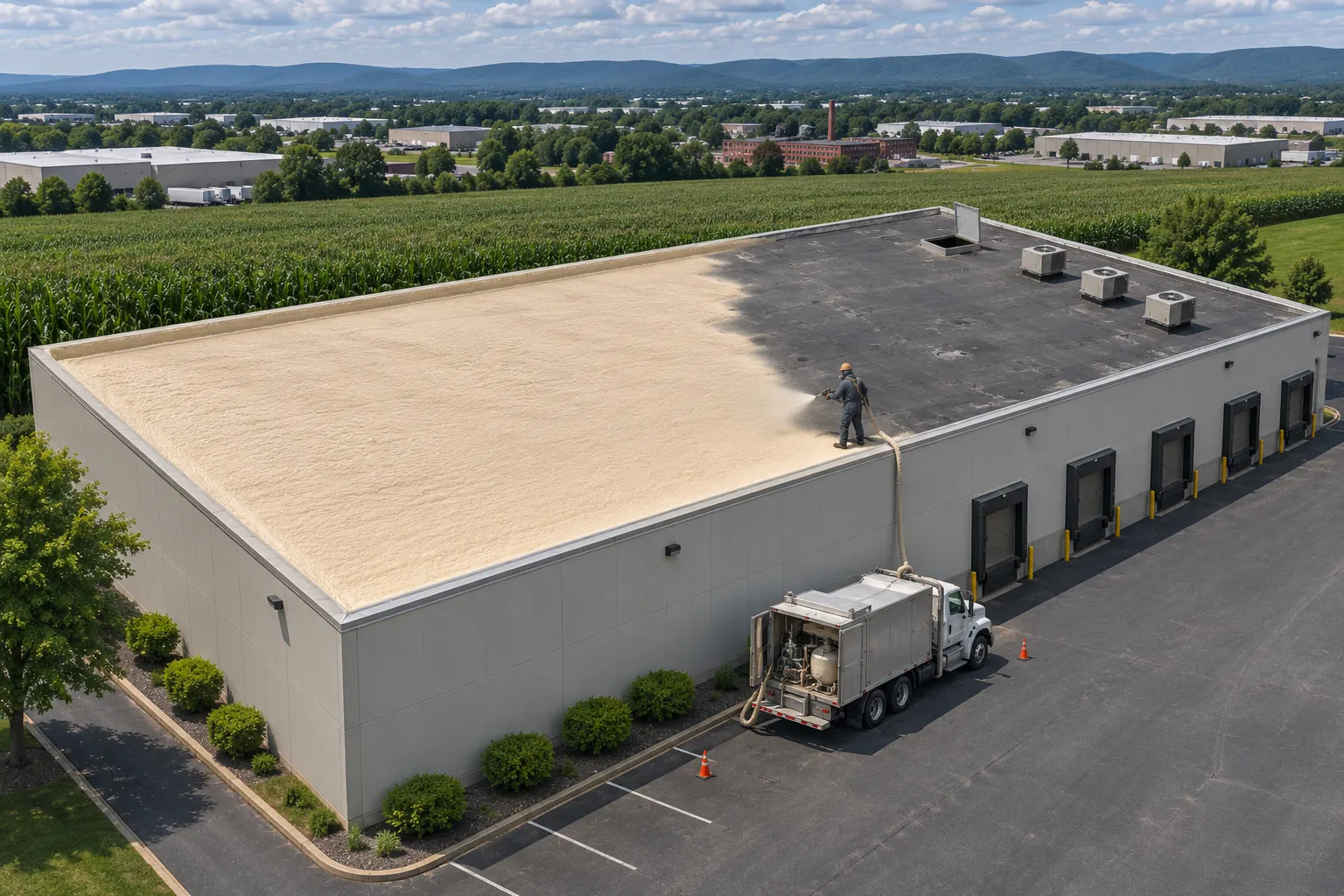
Mechanicsburg metal roof coating on office buildings starts with what sits around the roof: parked cars, condensers, intakes, and neighbors. We agree on a protection plan before any spraying, set work hours that suit tenants, and switch to rollers and brushes when wind would carry overspray off the roof.
The roof work itself still covers screws, laps, and flashing in full.
Office roofs here bring a mix of roof and site conditions that shape the plan.
Ground and roof units near the work area need covers or a no-spray zone so coating never lands on coils.
Drips onto finished ceilings usually trace back to a few screw rows. Those fasteners get replaced and sealed.
Office roofs carry many small penetrations. Each boot and collar is resealed so the coating ties into it.
Visible roof faces show chalking and fade first. Washing and an adhesion test decide the primer.
Coating keeps an office roof watertight without moving anyone out of the building.
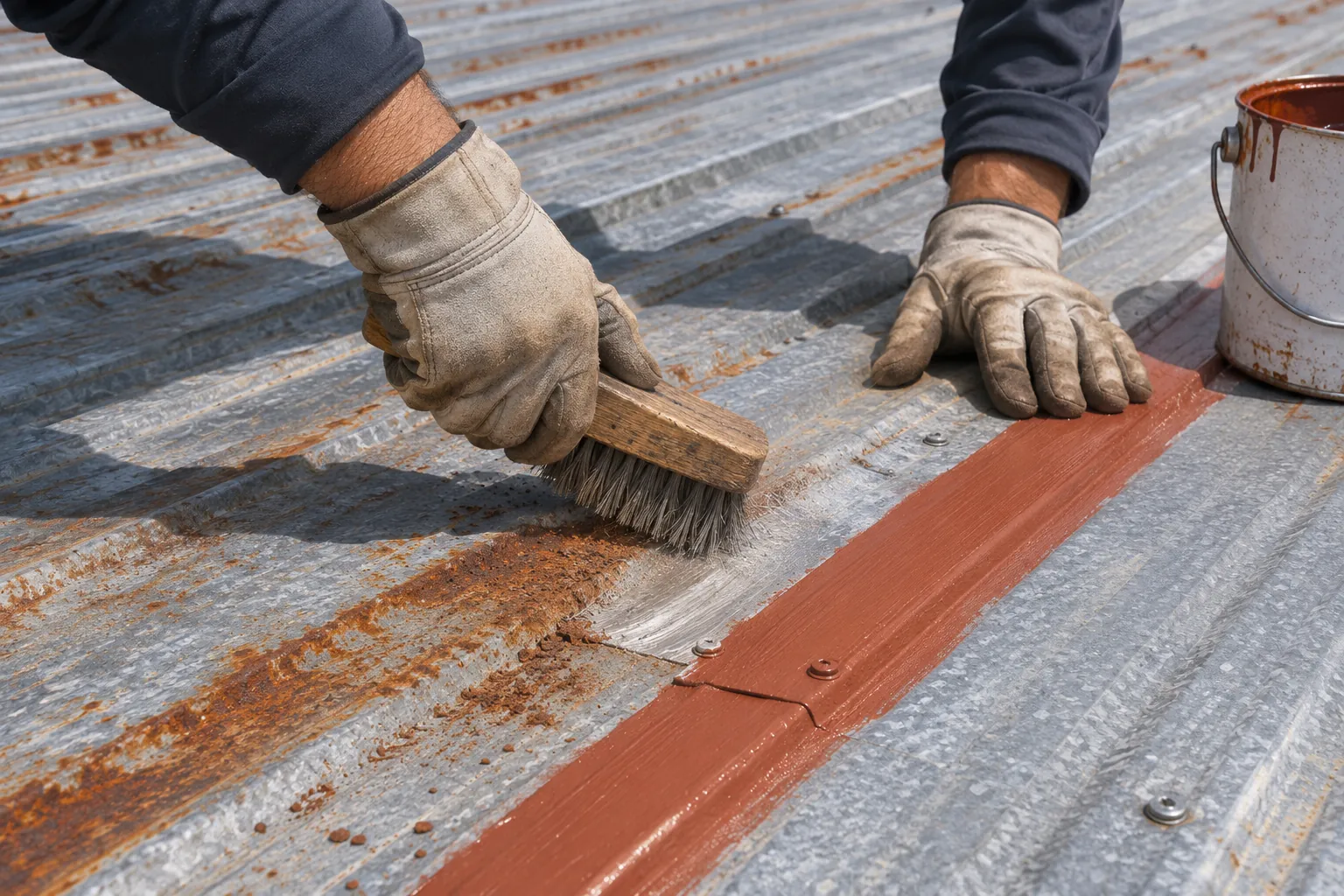
Work happens on the roof surface in sections, so tenants keep their offices and visitors keep their parking. Prep and coating days are scheduled with your property manager ahead of time.
Coating skips the noise and debris of pulling off old panels, which matters over occupied workspaces. Screw replacement is the loudest step, and it is kept to agreed hours.
Sealed fasteners and laps stop the drips that stain ceiling tiles and damage finished interiors. Stains on ceiling tiles near screw rows tend to stop once the fasteners are sealed.
Light coatings reflect summer sun, keeping top-floor spaces under a metal roof more comfortable. Light topcoats also slow the fading that shows on street-facing roof faces.
Office roofs here usually take one of these, chosen around the building's surroundings as much as its roof.
Where spray drift is a concern, coating is rolled and brushed on, which takes longer but keeps material on the roof. Rolled coating still reaches the specified thickness, checked with a wet-film gauge.
Open roofs away from cars can be sprayed on calm days, with a spotter watching wind and the property line. A spotter stops spraying as soon as wind gusts pass the agreed limit.
Pitched metal office roofs take primer, fabric at laps, and acrylic in a color that suits the building. Color can match the building trim or stay light for summer heat.
Flat portions behind parapets that hold water get silicone after the drains are cleared. Parapet walls and their coping get flashing work before the flat section is coated.
Call us to talk through a protection plan. We will mark spray zones, covers, and rolled areas before scheduling any coating.
Four steps, with site protection planned alongside the roof work.
Panels, screws, vents, and flashing get checked, and we map cars, condensers, intakes, and entrances around the building. Photos of each go into the plan.
Work hours, tenant notices, protection covers, and spray or roll zones are set with your property manager, and tenants get notice before prep days.
Screws are replaced, laps resealed, penetrations reflashed, and the surface washed and primed while covers stay on nearby equipment.
Coating goes on section by section, sprayed or rolled as the plan allows, with covers removed only after curing and a final walk with your manager.
We coat roofs in these towns and in Harrisburg too. Building elsewhere? Give us a call or send a note.
Long warehouse roofs where years of seam tape get tested and stripped.
Buildings where coating stops cleanly at a ridge or gutter line.
Curbs and intakes that need flashing work before coating ties in.
Roofs walked often by technicians, where wear paths get pads.
What office owners ask before coating starts.
Yes, with a protection plan agreed before spraying begins. We look at wind, nearby vehicles, intakes, and the application method when laying out the work area. Where spraying cannot be controlled, rolling or a different sequence keeps the coating from causing problems around the building.
Yes. Office buildings across Mechanicsburg and the nearby towns get the same inspection and protection planning before any work. Each building gets a written plan for covers, spray zones, and entrance access before work starts.
Small office roofs are welcome. They often finish in one dry stretch, with the same preparation steps as larger buildings. A small roof still gets screws, laps, and flashing checked before any coating goes on.
Coating plans at about $2.50 to $4.00 per square foot of roof. On offices, protection work, rolled versus sprayed application, and penetration count move the figure. Brush and roller work takes longer than spraying, which adds labor to the price.
Yes. Rolling and brushing keep every drop of coating on the roof, which suits offices with parked cars, condensers, and neighbors close to the edge. It takes more labor than spraying, so we often combine the two: rollers near the edges and around equipment, spraying in the open middle of the roof on calm days.
Coating days themselves are quiet, and fumes stay outside with intakes covered.
They will hear prep work such as screw replacement and washing. We schedule those days with your manager and keep entrances open throughout. Any odor fades as the coating cures, usually within the day on warm, dry weather.
Get a ballpark for your office roof, or call to set up a walk-through with your property manager.