
Foot Traffic
Worn Paths From The Hatch
A line of scuffed finish runs from the roof hatch to each unit. Those paths get reinforcement and marking.
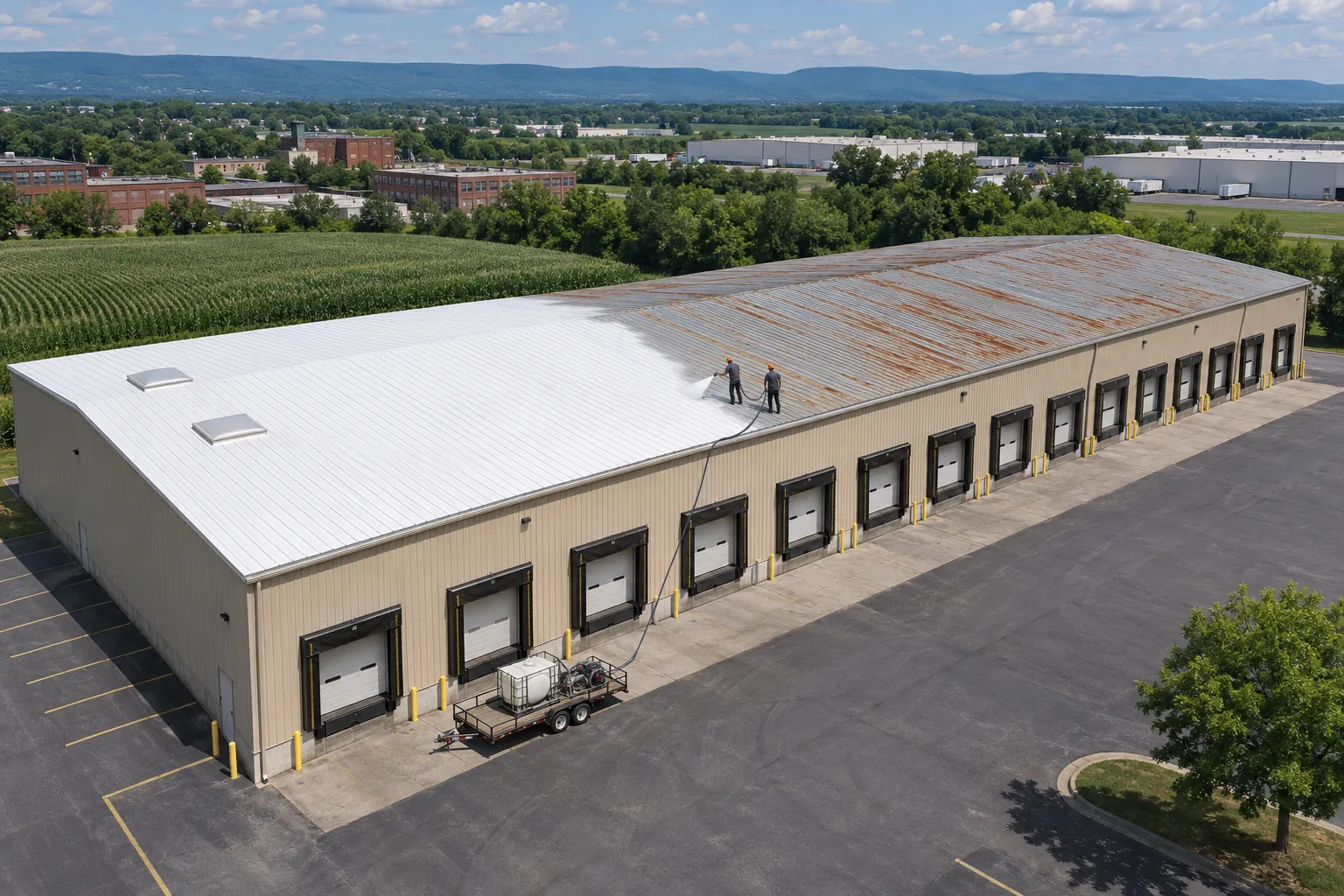
New Cumberland metal roof coating from us focuses on warehouse roofs that technicians walk often, with service routes planned, wear areas reinforced, and records kept.
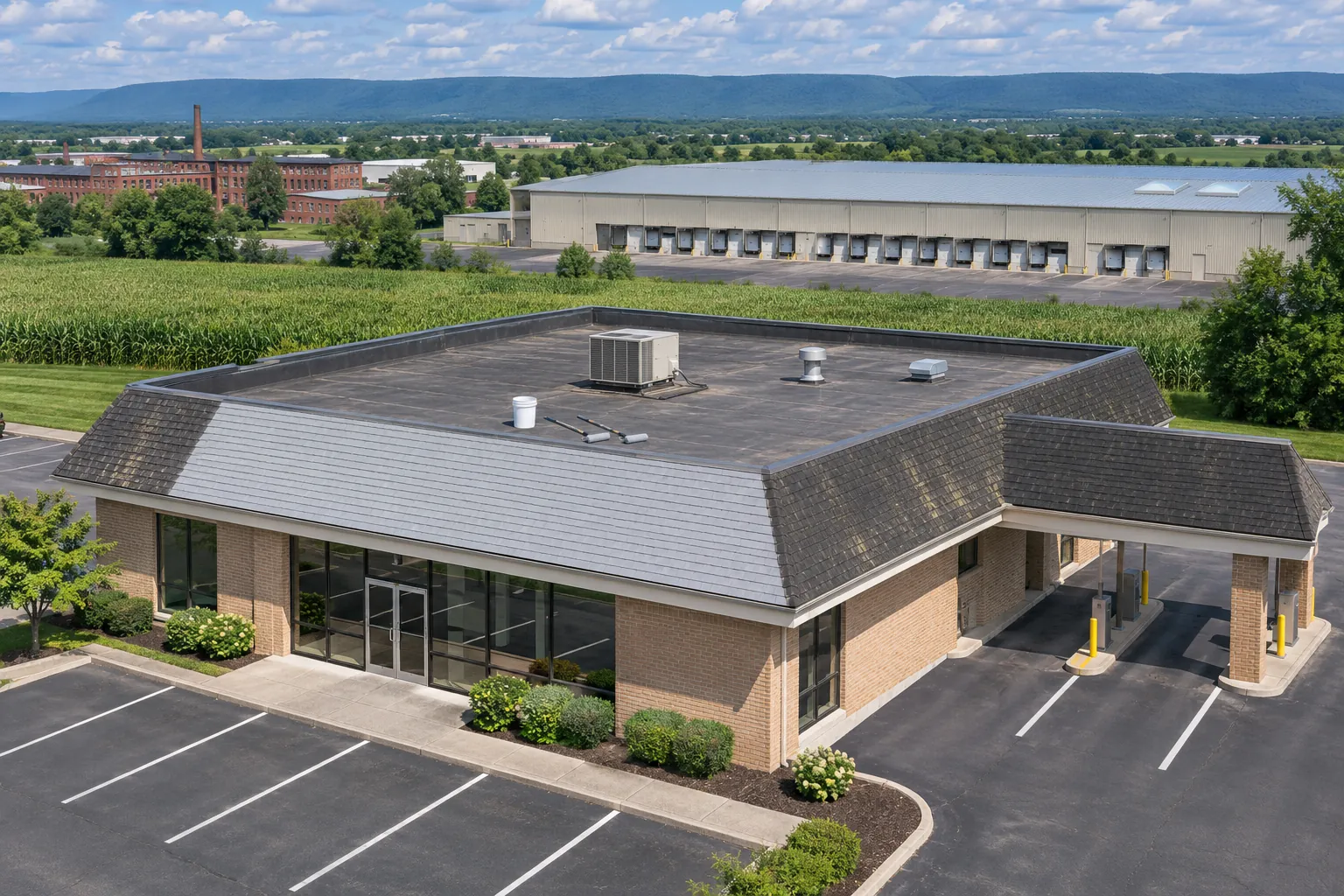
New Cumberland metal roof coating work on warehouses has to account for the people who walk the roof after we leave. Maintenance traffic concentrates damage near equipment, and dropped tools and parts land on seams.
Planned routes with protection keep that wear in places built for it, while inspections still cover the rest of the roof. Panel laps near the hatch and around each unit get the closest look, since those take the most boots and dropped parts.
Maintenance traffic leaves a clear trail on warehouse roofs. These are the patterns we look for.
A line of scuffed finish runs from the roof hatch to each unit. Those paths get reinforcement and marking.
Tools and parts set down near equipment dent panels and puncture coating. Damaged spots are repaired before recoating.
Fasteners along walked lanes loosen faster. They are replaced and sealed with extra coating over the heads.
Where people step onto the roof, edges and panels take a beating. Landings get pads and reinforced coating.
Coating with planned routes keeps maintenance from undoing the work.
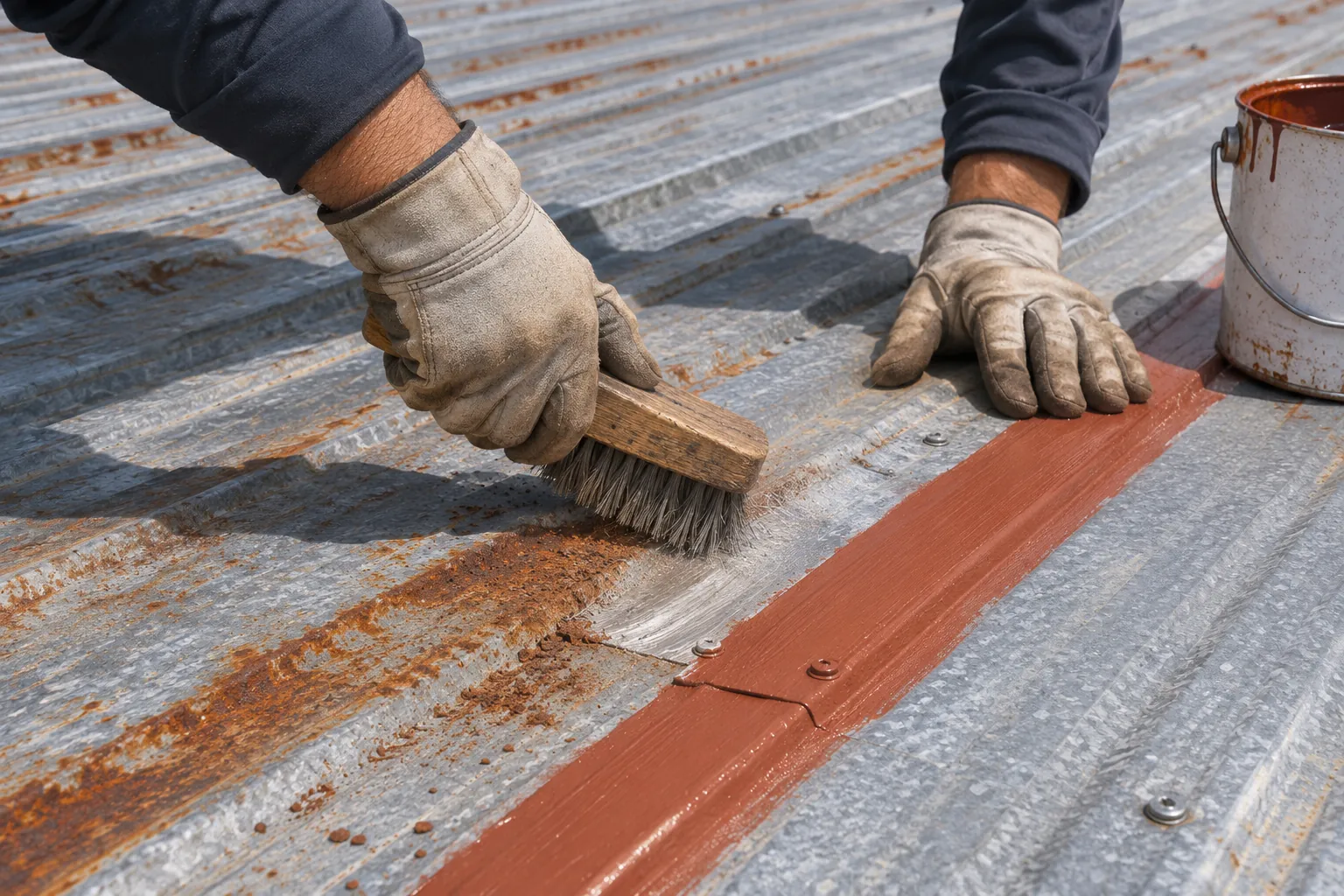
Marked routes with pads take the foot traffic, so the coating elsewhere stays intact longer. Routes also keep crews from cutting across seams to reach a unit faster.
Warehouses with regular HVAC or refrigeration visits get routes that fit those crews and their equipment. The routes are drawn on a roof plan you keep with the building records.
Records of products and thickness let any crew patch the coating with a compatible material. Repairs that match the original system blend in and wear at the same rate.
Keeping parts and tools off lap lines prevents the punctures that start leaks on these roofs. Staging spots get pads, so parts and tools never rest directly on laps.
Protection along service routes takes a few forms, chosen for traffic level and roof type.
Granules set into the final coat along routes give grip and a tougher surface without extra pads. Granules in the topcoat also make the routes easy to see from the hatch.
Pads made for the coating system are set at landings and around units where traffic is heaviest. Pads around units take the weight of technicians kneeling at service panels.
Areas off the routes get a standard primed, two-coat system with fabric at laps and screws. Screws in the field get sealed under fabric before the two coats go on.
A simple schedule of post-storm and seasonal walks catches route wear before it reaches bare metal. Each walk compares route wear with the rest of the roof surface.
Call us and we will map the routes your service crews use, then plan protection into the coating job.
Four steps, with the maintenance routes designed into the job.
We walk from the hatch to every unit, logging worn paths, dents, loose screws, and laps near staging spots. The findings go on a simple roof plan.
Service paths, landings, and parts staging areas are laid out with your maintenance team, matched to the units they visit most.
Damaged panels, loose fasteners, and worn laps are fixed, and the roof is cleaned and primed, starting with the most traveled areas.
The field gets its full coating, and routes and landings get granules or compatible pads before the roof reopens to crews.
We take jobs in these towns and in Harrisburg as well. Somewhere nearby but unlisted? Phone us or write us.
Big metal roofs coated bay by bay so loading never stops.
Tenant-occupied office roofs with work hours agreed before prep starts.
Phased roof jobs that restore one slope now and the other later.
Equipment roofs where HVAC shutdowns are scheduled with building staff.
What warehouse owners ask about upkeep after coating.
Yes. Maintenance traffic concentrates damage near equipment, so planned routes help. We match the protection to the coating system, and the routes keep tools and parts away from vulnerable seams, while inspections still cover areas beyond the marked paths.
Coating plans at about $2.50 to $4.00 per square foot of roof. Route pads, repairs to traffic damage, and the number of units move a warehouse job within that range. Panels dented by tools get repaired before pads go down over them.
Yes. Smaller warehouses and shops get the same inspection, route planning, and coating steps as large ones. Small roofs often have one or two units, and their routes get the same protection.
Twice a year and after major storms is a common schedule. Roofs with heavy service traffic benefit from checks after big equipment jobs too. Checks after large equipment swaps catch punctures from dropped parts early.
Routes start at the hatch or ladder and run along the flattest, most direct line to each unit, staying off panel laps and away from gutters where possible. We lay them out with your maintenance team, since the crews who walk the roof know which units get visited most and where parts usually get set down.
Product records list the primer, coating, and thickness so repairs match.
Small repairs, yes, with compatible products from the records we leave. Larger damage is worth an inspection to check the metal underneath. Pads sit on the coating surface and are checked for edge wear during inspections.
Get a planning range from your roof area, or call to map your service routes on the roof.