
Repair Layers
Tape Stacked Over Tape
Successive patches build into thick, uneven strips. Loose layers come off so the coating bonds to the panel instead of a failing edge.
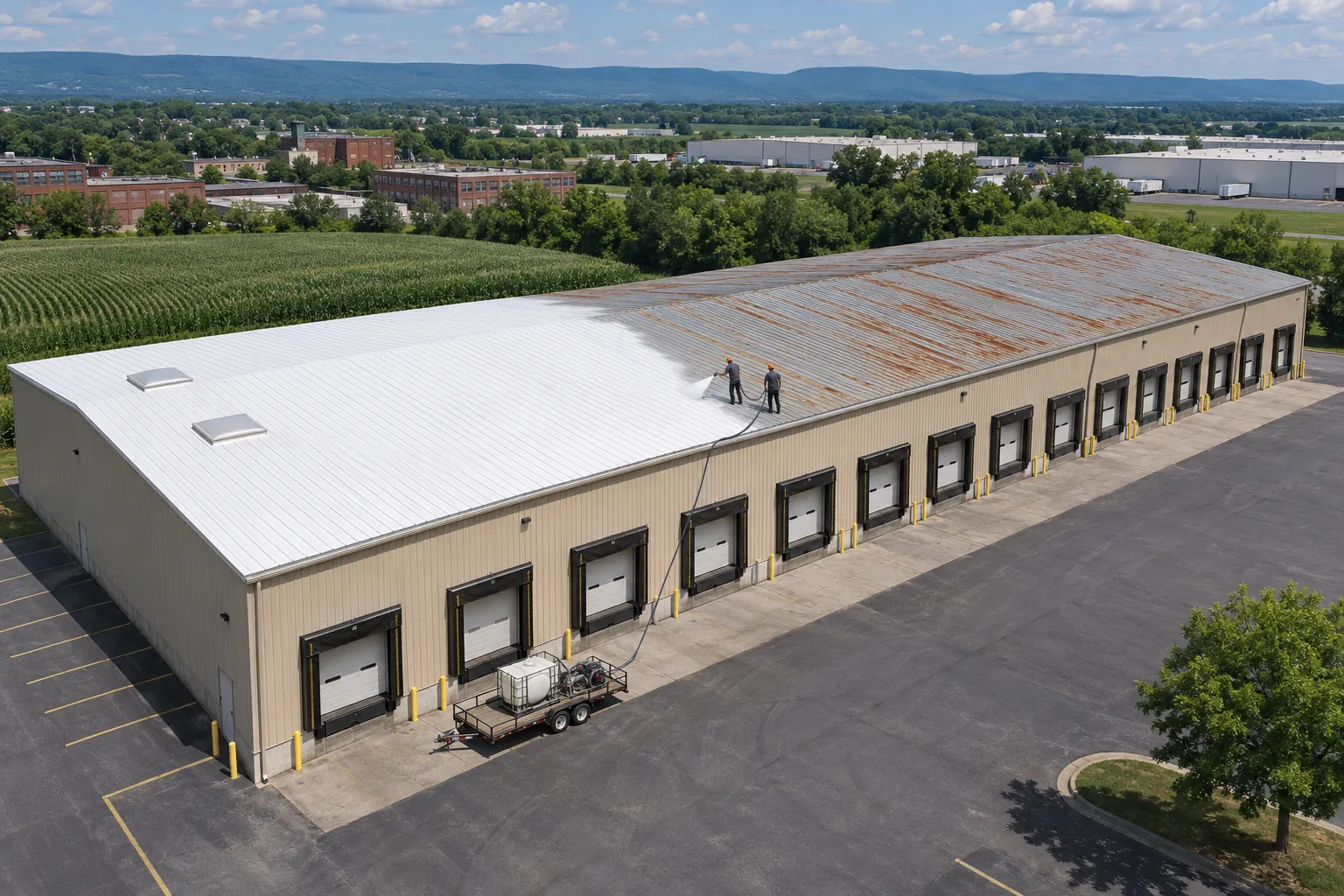
Carlisle metal roof coating from us centers on warehouse and distribution roofs, where layered tape repairs get tested and seams rebuilt before any coating goes down.
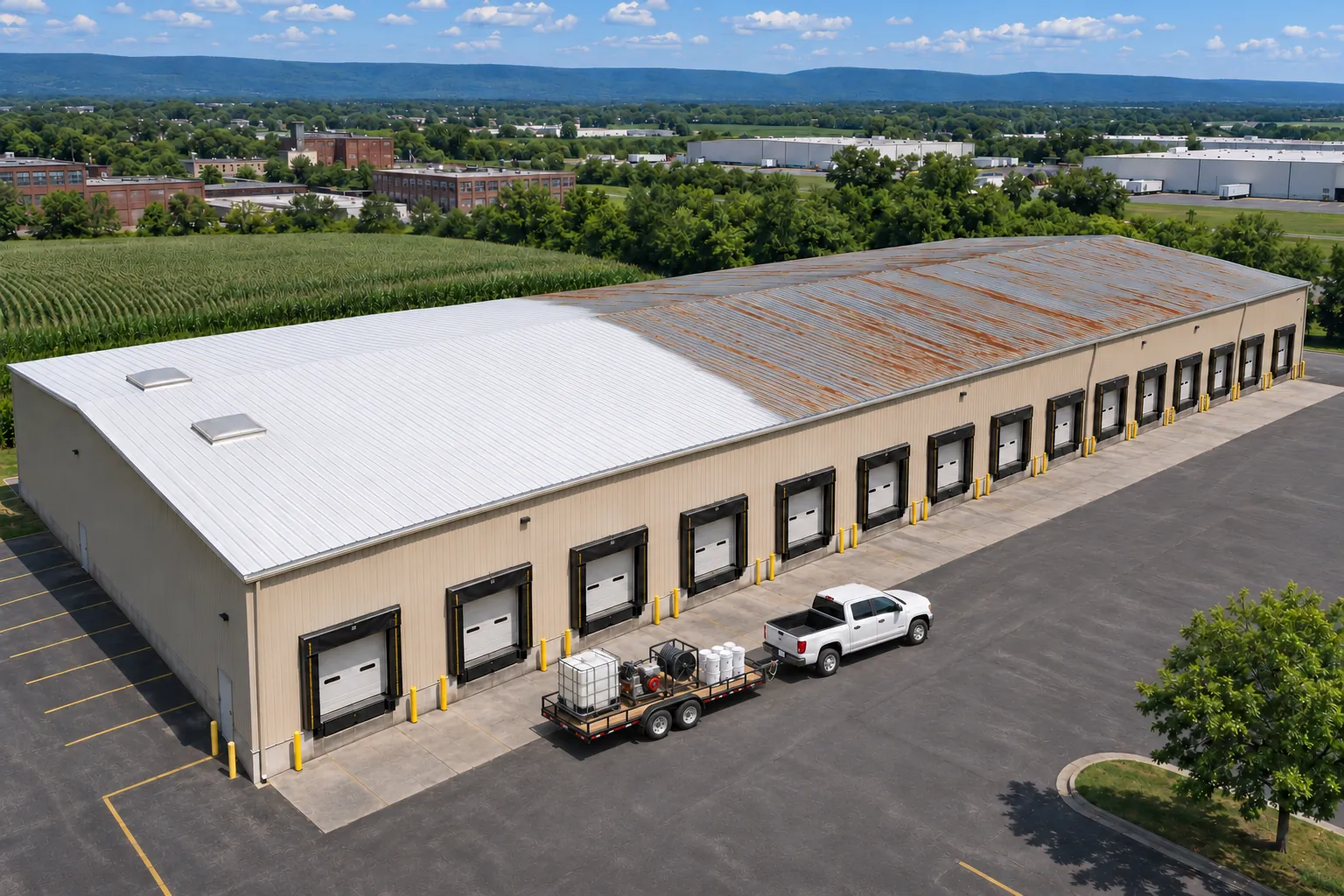
Carlisle metal roof coating work lands mostly on long warehouse roofs that have been patched for years. Strips of repair tape and mastic run along seams, and each layer covers something. We identify the materials, peel back anything loose or incompatible, and look at the seam underneath before deciding what stays.
Dock schedules then set the order in which bays get prepared and coated.
Warehouse roofs here share a few recurring conditions, and each one changes the preparation.
Successive patches build into thick, uneven strips. Loose layers come off so the coating bonds to the panel instead of a failing edge.
Water trapped beneath tape rusts the lap it was meant to protect. We open the patch and measure what metal remains.
Long panel runs move with every temperature swing, working end laps loose. Those laps get resealed and reinforced.
Big roofs feed big gutters, and blocked ones back water into eave laps. Cleaning and checking them comes first.
Coating a warehouse roof in Carlisle trades a patchwork of repairs for one continuous surface.
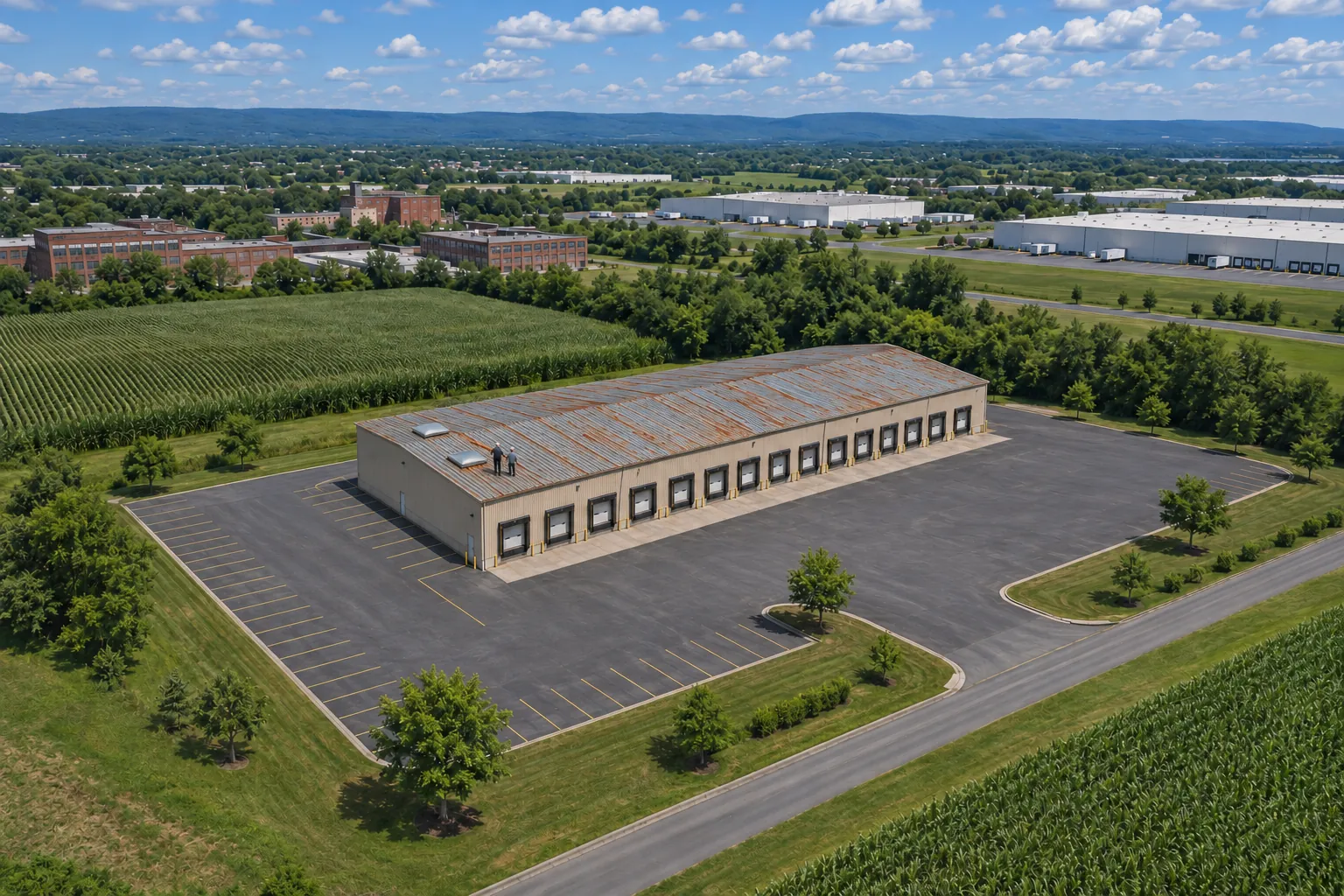
Large roofs cost less per square foot to coat than to replace, and the work proceeds bay by bay without stopping shipping. Big roofs also give more room to stage material away from the docks.
Replacing scattered tape with reinforced seams and a continuous coating removes the edges where water used to start. Rebuilt seams carry fabric and sealant suited to the movement of long panels.
Sealed laps and fasteners keep rain off racking, pallets, and conveyor lines below the roof. Gutter lines along the docks get special attention, since drips there land on trailers.
Photos and notes from the tape removal show what was found, so later inspections have a baseline. The record also helps when a tenant or buyer asks about the roof.
Most warehouse roofs here take one of these four approaches, chosen after the tape comes off.
Warehouse roofs that drain quickly take primer, fabric at every lap, and a two-coat acrylic build. Long runs get fabric at every end lap where panels move the most.
Valleys and gutter lines where water lingers get silicone, sometimes paired with acrylic on the faster slopes. Gutter lines on these roofs are cleared and checked before any coating.
Sections where tape hid rust-through get new panels first, then the whole roof is coated together. New panels match the existing profile so laps close tightly.
Buildings that need warmer interiors take foam over the panels with a protective topcoat. Foam over panels also covers every taped seam in one continuous layer.
Call us before coating goes over it. We will test the tape, check what sits under it, and tell you what has to come off.
Four steps, built around warehouse operations and the tape removal.
Every taped seam is logged, sample patches are lifted, and the deck under drips is checked for wet insulation.
Loose tape comes off, rusted laps are cleaned and primed, and failed sections get new panels or rebuilt seams.
Coating moves bay by bay so trucks keep loading, with material lifted to the roof away from active doors.
Base and top coats go on to thickness, and photos of the stripped seams go into your roof record.
The same crew coats roofs in the towns below and in Harrisburg. Somewhere else? Call or message us.
Occupied office roofs where spray zones and tenant hours shape each job.
Distribution roofs where one weathered slope can be restored by itself.
Office roofs crowded with units and air intakes that set the work order.
Warehouses whose service routes get marked and reinforced during coating.
Questions warehouse owners here ask most.
Yes, when the tape is loose or incompatible with the coating. We identify each tape and check the seam beneath before deciding what stays.
Removing a bad patch can uncover more preparation work, and finding it now beats trusting an uncertain bond buried under the new coating.
The planning range is about $2.50 to $4.00 per square foot of roof. On warehouses here, the amount of tape removal, the number of laps to rebuild, and lift access set where a job lands. Panel replacement found under tape removal is priced separately once we see what the tape hid.
Yes. We work on warehouse and distribution roofs across Carlisle and the surrounding area, and the inspection is the same wherever the building sits. Distribution buildings of every size get the same tape checks and seam work before coating.
It can. We stage material and lifts away from active doors and coat the roof in sections, so loading continues below the area being worked. Night or weekend work on the section above busy doors is possible when the schedule needs it.
Only the tape that is loose, incompatible, or hiding damage. Firmly stuck, compatible patches can stay, which the adhesion test confirms on site. Tape that stays gets cleaned and primed so the coating grips its surface and edges.
Dock canopies and the roof edge above the doors take runoff from the whole slope, so leaks there are common. We check the gutter, the eave laps, and any canopy flashing where it meets the wall, repair them, and coat that strip with extra material so trucks and trailers below stay dry.
Each phase gets its own inspection notes, so you can see what changed from section to section.
Get a planning range from your warehouse roof area, or call to have the taped seams checked.