
Exposure
Sun-Faded South Slope
The slope facing the sun chalks and fades first. Its finish gets washed and tested while the shaded side is compared.
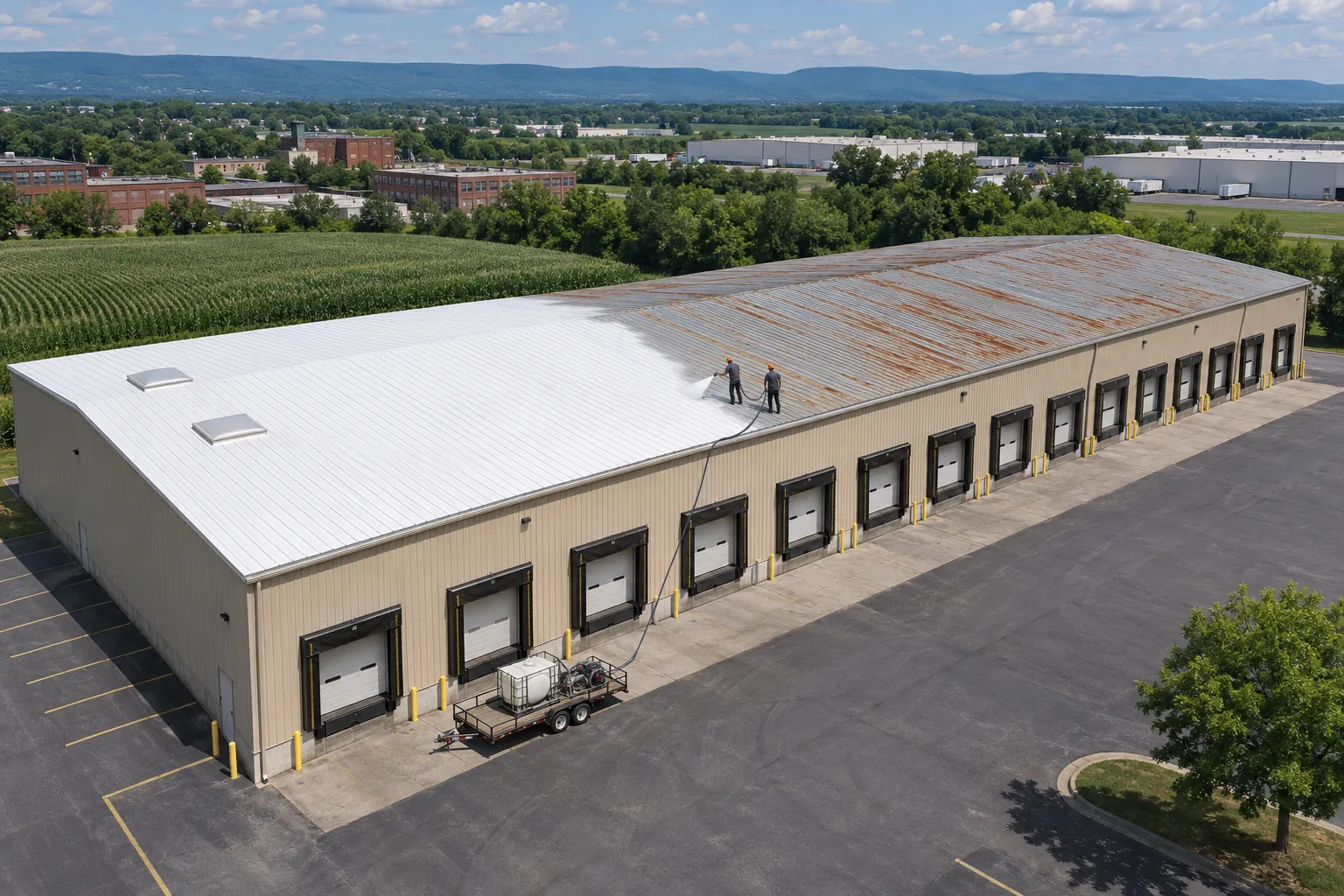
Middletown metal roof coating from us often covers one worn slope or section of a distribution building, with the stopping line set at ridges, gutters, and transitions.
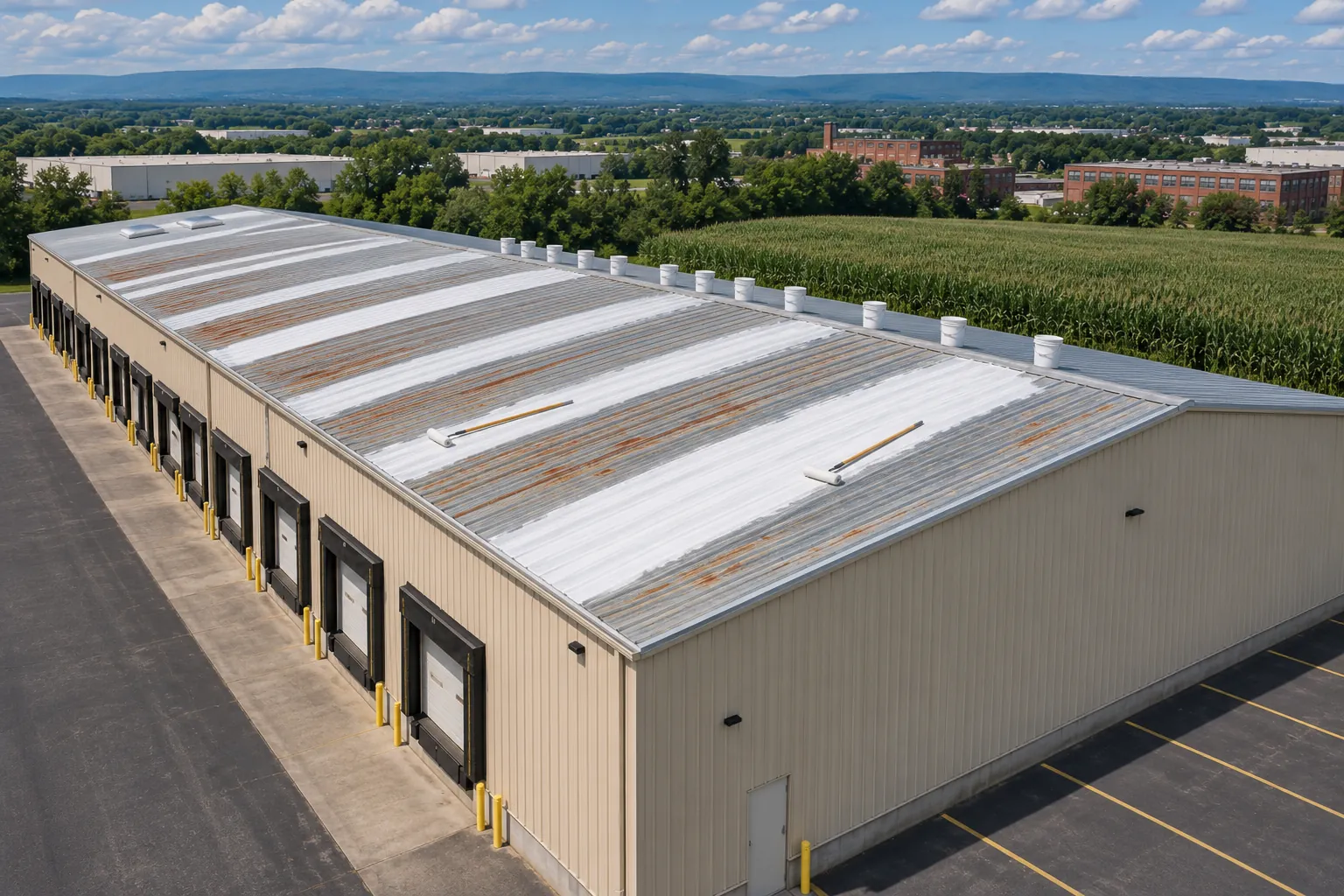
Middletown metal roof coating requests often involve one slope that faces the weather and has aged far faster than its twin. Coating just that side works when the ridge, gutters, and transitions allow a clean dividing line.
We still walk the whole roof, because a healthy-looking slope can share attachment or moisture problems with the worn one. Those shared problems get fixed on both sides, even when only one slope is coated.
One-sided wear leaves a pattern. These conditions tell us where the work should stop.
The slope facing the sun chalks and fades first. Its finish gets washed and tested while the shaded side is compared.
Panels facing prevailing storms show loose screws and lifted edges. Fastening gets fixed on that slope first.
The ridge often marks the stop line. Its closures and caps get resealed so the coated and uncoated sides meet cleanly.
Where both slopes drain into one gutter, the gutter gets repaired across its whole length, coated slope or not.
Coating one section puts money where the roof is failing and leaves the sound side alone.
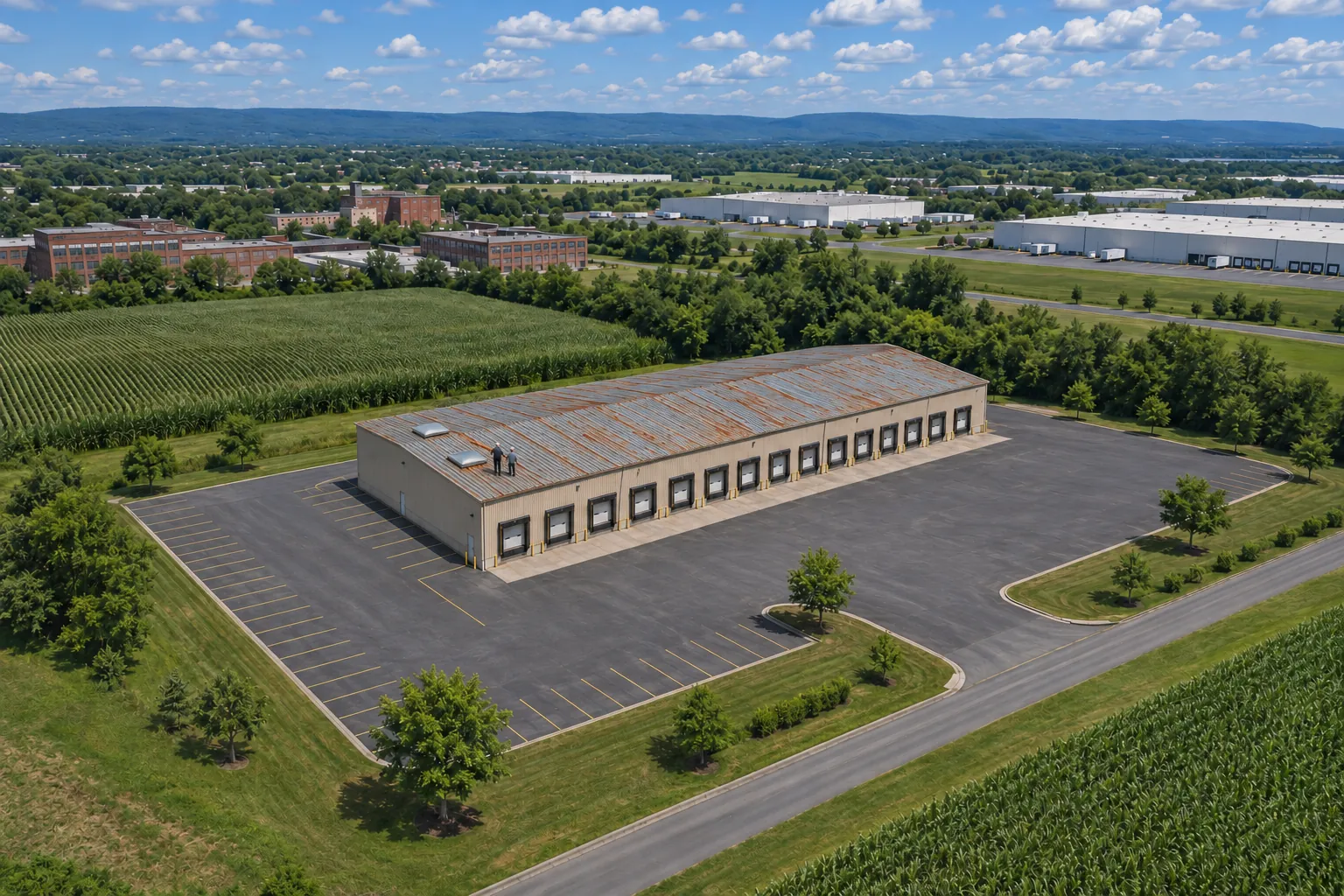
Coating only the weathered slope keeps the cost tied to the part of the roof that needs it. The inspection also confirms the other slope is holding up as well as it looks.
Phased work lets owners restore the worst section this year and plan the other side later. A phased plan keeps both sides on the same product family for later matching.
Ridges and gutters that act as stop lines get sealed, so water cannot work under the edge of the coating. Stop lines at ridges get reinforced fabric so movement never opens the edge.
Notes on the uncoated side show how it changes, so the next phase is planned with real information. Photos of fasteners and laps on the uncoated side show how fast it is changing.
Section work takes a few forms, depending on how the roof is built and where it wears.
The weathered side gets full preparation and coating, ending at the ridge cap and the gutter edge. Ridge caps and closures are resealed before the coating meets them.
Long buildings with uneven wear get coated in bays, starting with the worst and stopping at expansion joints. Expansion joints make clean breaks between bays on long distribution roofs.
Both slopes get coated, a season apart, with matching products so the roof ends up as one system. The second phase uses the same primer and coating so both sides wear alike.
Some roofs need only their valleys and gutter laps coated, where water concentrates and rust starts. Gutter laps and valley panels are where rust usually starts on these roofs.
Run a planning range for the worn section alone, then we will check whether the roof allows a clean stop.
Four steps, with the stopping line settled before any coating.
Both slopes get walked, fasteners and laps checked, and the differences between them photographed and written down.
Ridges, gutters, expansion joints, and transitions are judged as dividing lines, and the cleanest one is chosen.
Screws, laps, and rust on the worn section are fixed, and the dividing detail is resealed on both sides.
Primer and coating go on up to the stop line, finished with a sealed edge that sheds water away.
We also coat roofs in these towns and in Harrisburg. Not on the list? Ring us or drop us a message.
Distribution roofs carrying layer after layer of tape and mastic patches.
Office roofs with cars and condensers close enough to need covers.
Rooftop units and ducts whose penetrations get resealed one by one.
Service lanes from hatch to unit protected with granule surfaces.
What owners ask about coating part of a roof.
Often, yes, if the rest of the roof and the shared details allow a clean division. We inspect ridges, gutters, and transitions to set where the work stops.
Differences in condition get documented, because a healthy-looking slope can share attachment or moisture problems with the side being treated.
Yes. We record the products and colors used, so a second phase on the other slope uses the same system and the roof reads as one surface. Matching products also keeps future repairs simple across both slopes.
Small sections are welcome: valley lines, one bay, or a single slope, each sized to what the inspection shows. Smaller sections still get primer, fastener work, and full coating thickness.
Coating one side leaves the other side exactly as it was. Any existing warranty terms on the panels are worth checking before work starts. Ridge closures and gutter joints at the dividing line get reviewed with you first.
We compare both slopes for rust depth, loose fasteners, open laps, and moisture below. The side with leaks, deeper rust, or worn finish goes first. If both turn out close to equal, coating the whole roof at once usually costs less than two separate mobilizations, and we say so in the written findings.
A light gray on the coated slope often blends better with weathered panels than bright white.
They will, until the second phase or for good if only one side is coated. Color choice can keep the contrast low. Edges at the line get an extra pass of coating and fabric where needed.
Price the worn section from its area, or call to have both slopes compared before you decide.