
Wet Layers
Moisture In The Old Roof
Foam over wet insulation traps the water. Moisture surveys and core cuts find wet areas, and those boards are removed and replaced.
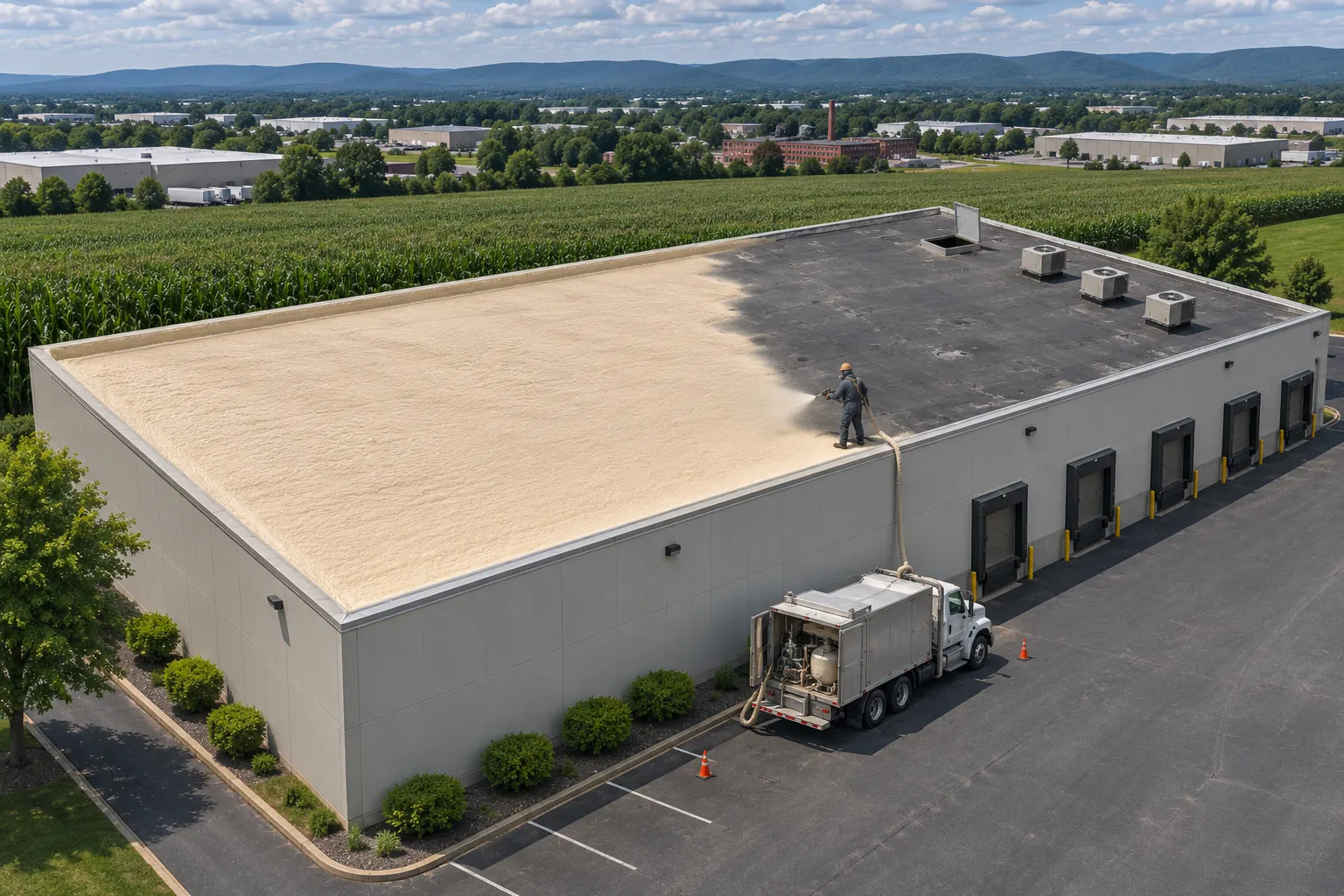
Harrisburg spray foam roofing from us adds a continuous insulated layer over flat and metal commercial roofs, finished with a coating that shields the foam.
Harrisburg spray foam roofing fits roofs that need insulation and a surface with no open joints. Compare your roof here.
Foam seals what it covers, so these problems get solved first.
Foam over wet insulation traps the water. Moisture surveys and core cuts find wet areas, and those boards are removed and replaced.
Panels that flex or have rusted through get fastened or replaced, because foam bonds best to a firm, stable surface.
Open overlaps get cleaned and secured so the foam bridges a stable joint instead of hiding an active leak.
Air intakes, exhaust fans, and vents get masked or shut down in sequence so foam and fumes stay out of the building.
Foam systems change with the surface below and the topcoat chosen.
Foam fills corrugations and covers screws and laps, creating one flat, insulated surface over the steel. The foam thickness at panel ribs is checked with probes as the work moves along.
Dry, well-attached membranes take foam directly, which avoids a tear-off and adds insulation in one pass. Edges and drains on these roofs get metal or foam details so water leaves cleanly.
Extra foam thickness toward the high side moves water to drains on roofs where ponding was a problem. Crickets of extra foam behind curbs push water around equipment toward the drains.
Every foam roof gets a coating that blocks sunlight, with granules added at walk paths for wear. Walk paths and the areas around rooftop units get the heaviest granule coverage.
Foam brings waterproofing and insulation in one sprayed layer.
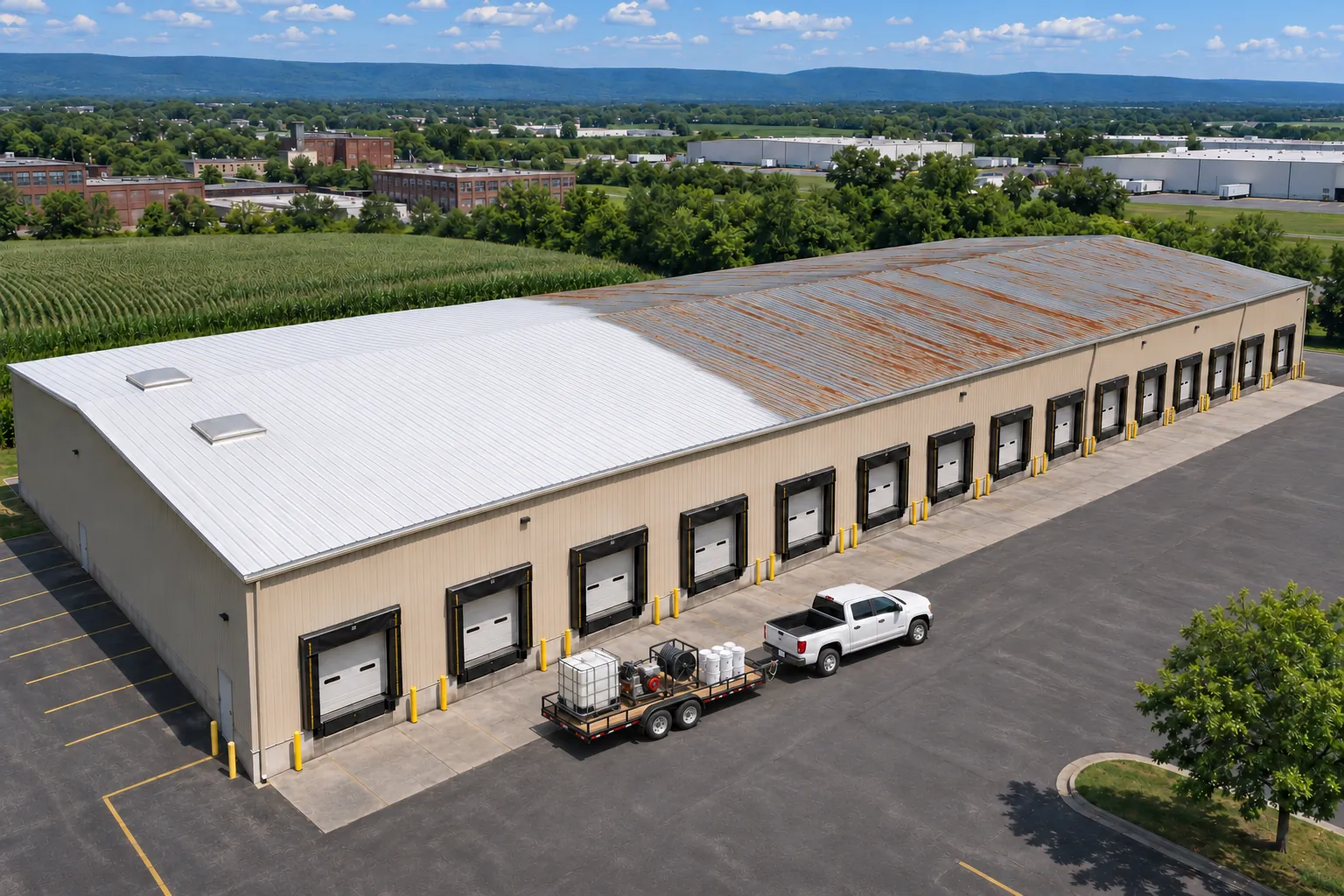
Closed-cell foam adds insulation above the deck, which helps buildings that run cold storage or heated warehouse space. Cold storage and food warehouses often see the clearest change in how the space holds temperature.
Sprayed foam forms one continuous layer across laps, screws, and old patches, leaving no joints for water to find. Curbs and penetrations get foam built up around them, so the flashing becomes part of the same layer.
Foam can be built thicker in places to steer water toward drains on roofs that used to pond. Old ponding rings around drains are usually the first places where extra foam goes.
Little weight comes with foam, so many roofs take it without removing the existing surface. Panels still get checked for loose screws and rust-through before any foam is sprayed.
Call us to talk through intakes, parking, and neighbors. We plan wind limits and covers before any foam is sprayed.
Four steps, with moisture testing and site protection settled before spraying.
We survey for moisture, core suspect areas, check panel attachment, and map intakes, vents, and nearby cars and buildings.
Wet materials come out, loose panels are fastened, the surface is cleaned, and intakes, windows, and vehicles get covered.
Foam goes on in passes to the planned thickness and slope, with wind speed checked throughout the spraying.
A silicone or acrylic topcoat covers all foam before it sits exposed to sun, with granules added along walk paths.
Roofs that do not need insulation often take a coating alone.
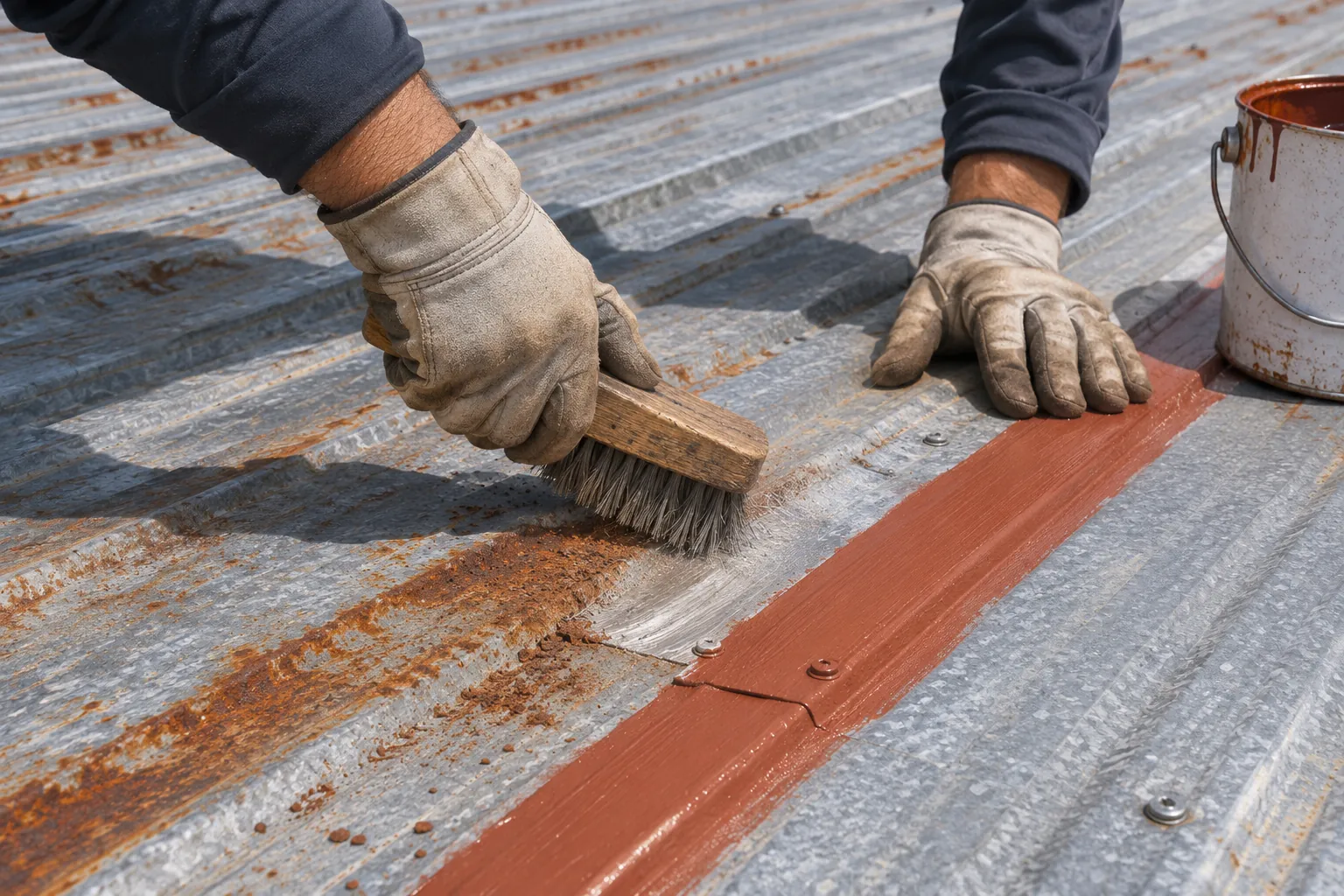
Steel roofs with firm panels get sealed fasteners, reinforced laps, and a two-coat system without foam.
Harrisburg Commercial Metal Roof Coating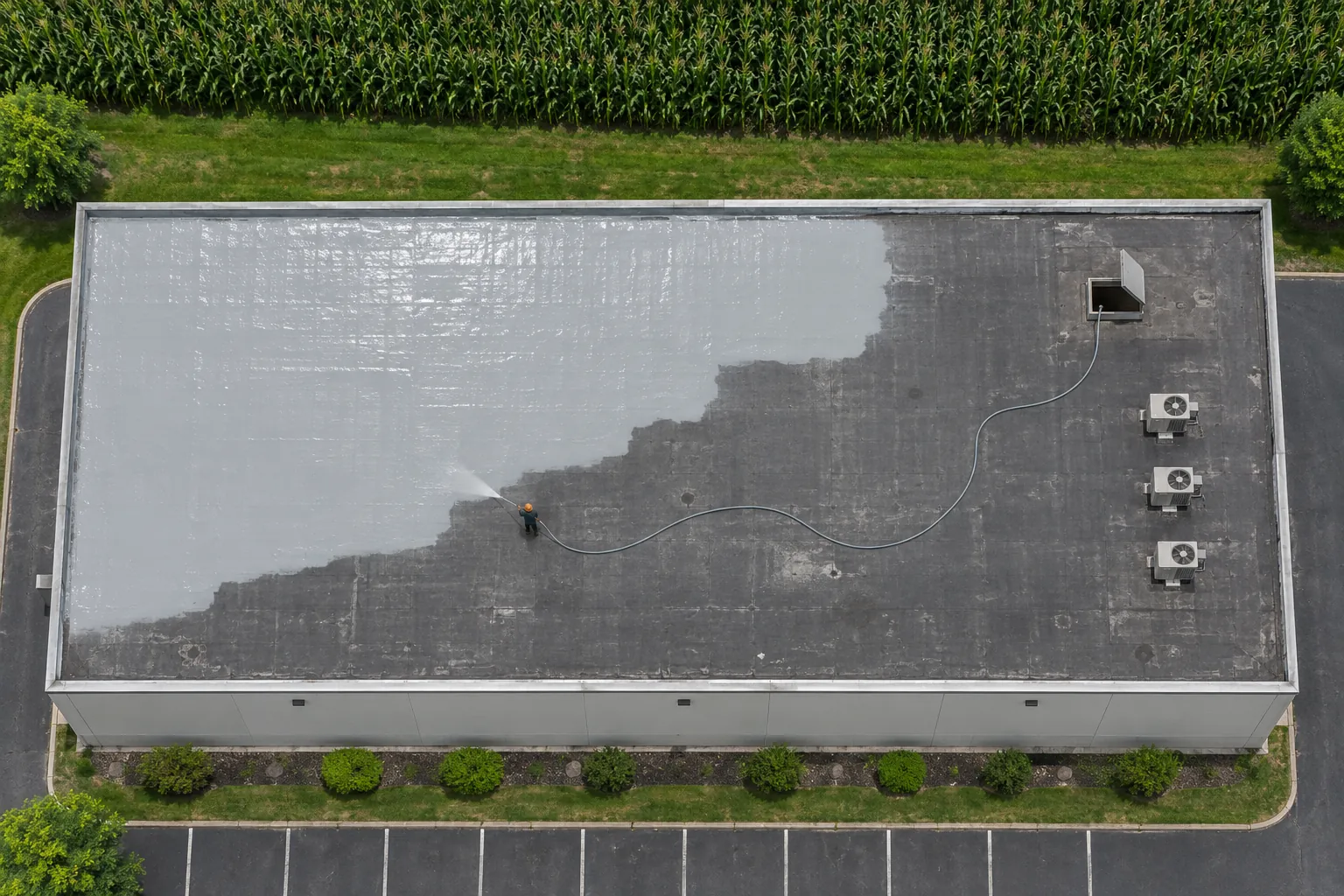
Low roofs that hold water get silicone directly, and silicone also works as the topcoat on foam.
Harrisburg Silicone Roof Coating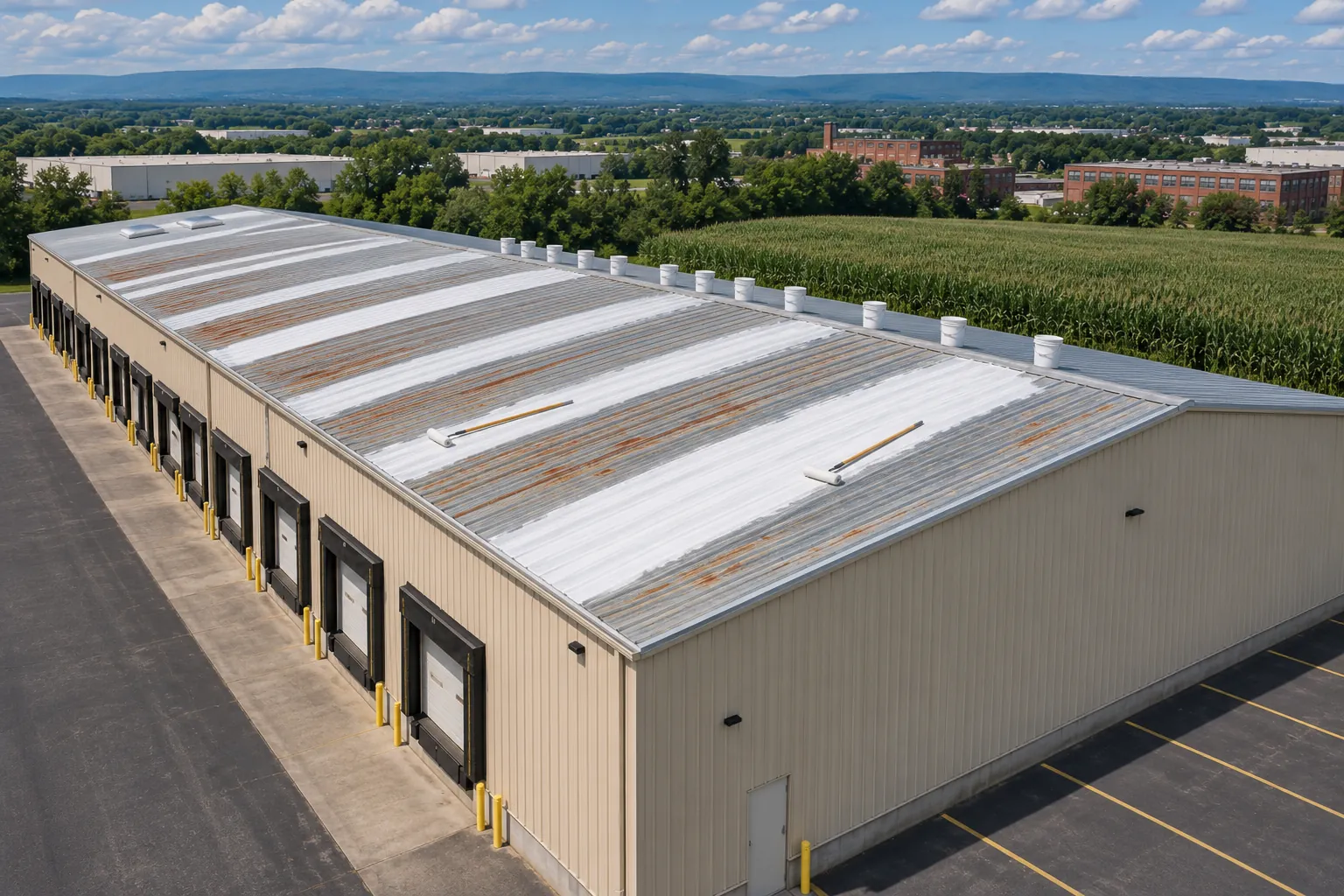
Pitched metal that drains fast takes a lighter acrylic build with fabric at the seams.
Harrisburg Acrylic Roof Coating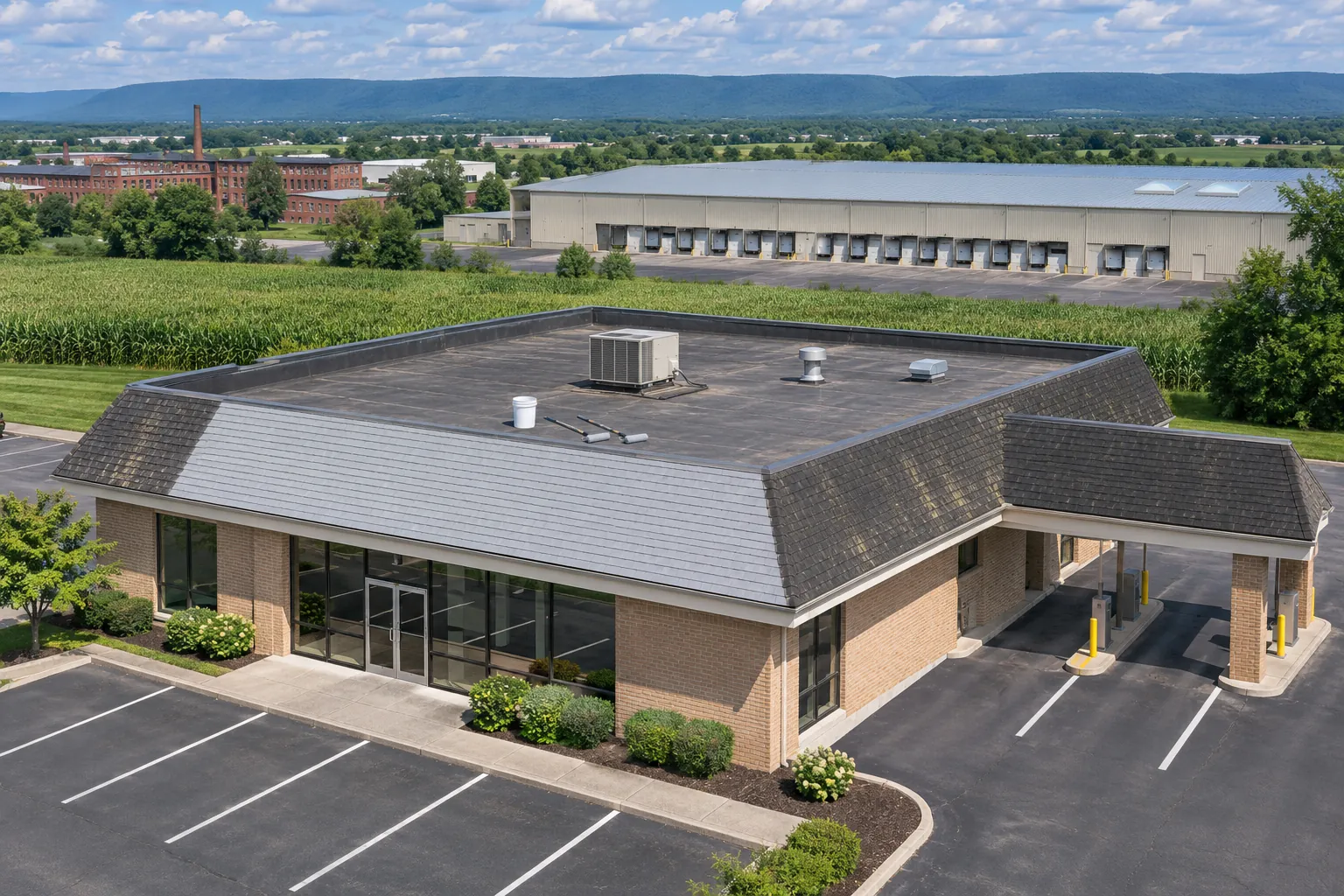
Commercial shingle roofs with flat tabs take an approved coating after flashing repairs.
Harrisburg Shingle Roof CoatingWhat owners ask before foam goes on.
It can be part of a good restoration at corrugated overlaps once the leaks, attachment, and moisture are dealt with. We inspect the panel connections first and decide how the foam bridges them.
Foam sprayed over wet or loose metal hides the evidence of a leak while leaving the cause in place.
Recoating fits when the foam underneath is still firm and dry and the wear sits in the protective coating. Widespread wet foam or poor attachment changes that, because another coat cannot save insulation that needs removal. We check adhesion, damage, and moisture before naming the work.
Soft foam, blisters, and wet readings during the inspection usually decide where removal is needed.
Foam forms a continuous insulated roof, but spraying needs careful control, calm weather, and a maintained topcoat. Around intakes, loading activity, and neighboring property, we plan the sequence and covers before spraying, and the owner's upkeep plan for punctures and worn coating belongs in the first conversation.
Forklift traffic, delivery hours, and wind direction around the docks all go into the spray schedule.
A foam roof lasts as long as its topcoat keeps sunlight and water off the foam. Inspections for punctures, blisters, and worn coating, with recoating when the topcoat thins, keep the foam underneath in service. Punctures from dropped tools are the main threat, so walk paths to units get extra protection.
Usually, yes, once the panels are firm and the insulation below is dry. Foam fills the corrugations and covers the screws, which removes most leak points at once. Screws, laps, and old patches all end up under one continuous layer of foam and topcoat.
Yes. The surface must be dry, temperatures within the product limits, and wind low enough to keep overspray on the roof. Most foam work here runs late spring through early fall. Cool, damp spring and fall mornings shorten the spray window on many days.
Run a planning range for foam from your roof size, or call to talk through moisture, intakes, and timing.