
Fastener Lines
Coating Exposed-Fastener Metal Roofs
Screws work loose as panels expand and contract. Loose ones are replaced with larger-diameter fasteners and new washers, and each head gets sealed.
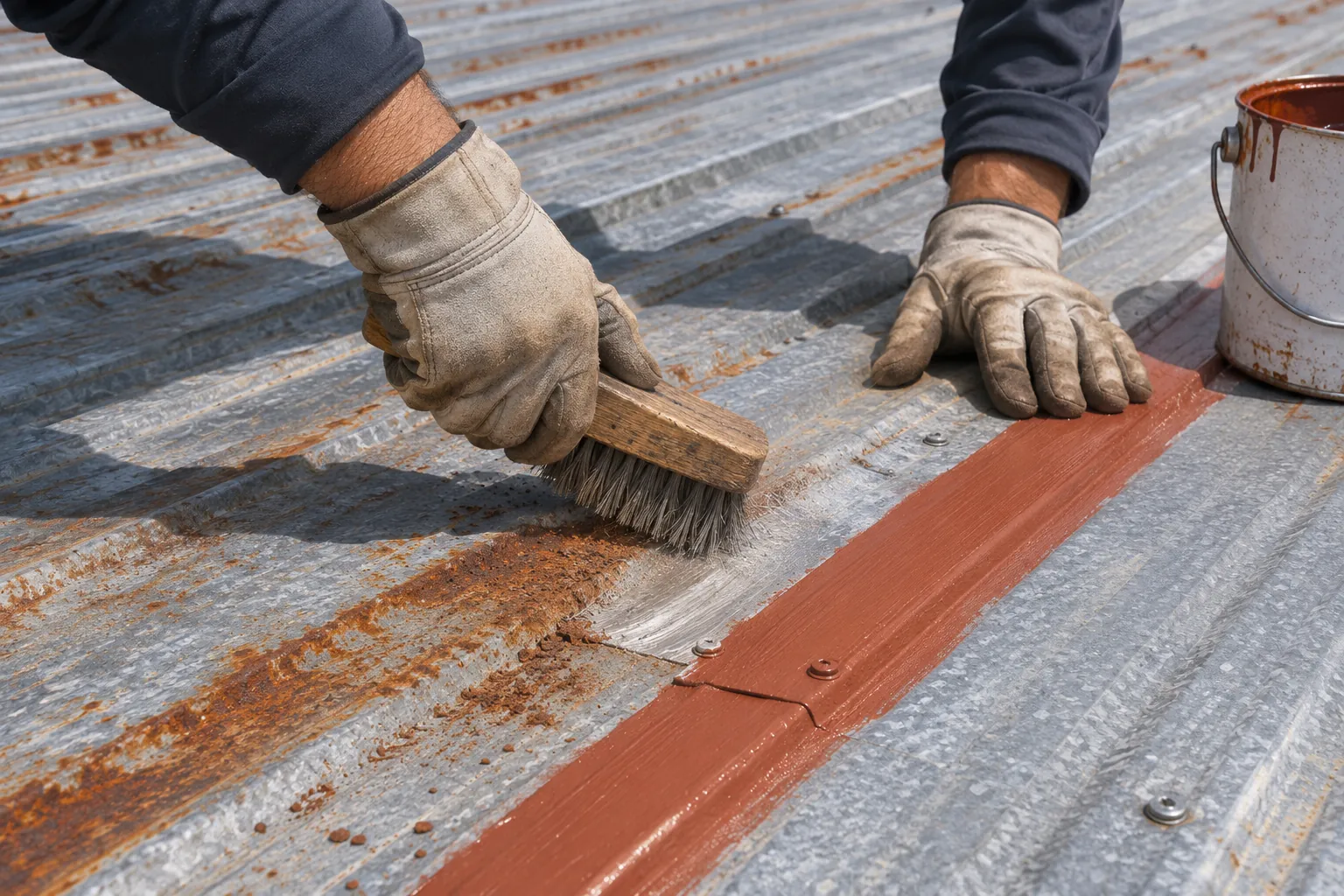
Harrisburg commercial metal roof coating is our core work: we treat rust, reseal every screw and lap, and coat ribbed and standing seam roofs on commercial buildings.
Harrisburg commercial metal roof coating works best on roofs whose steel still holds. Compare your roof with both columns.
These four conditions decide most of the preparation on commercial metal roofs. Each one gets handled before the base coat.
Screws work loose as panels expand and contract. Loose ones are replaced with larger-diameter fasteners and new washers, and each head gets sealed.
Scaled rust is ground or wire-brushed to firm metal and primed with a rust-inhibiting primer, so the coating bonds to steel instead of loose oxide.
Corrosion at laps hides under old sealant. We expose it far enough to judge the joint, then reseal, reinforce, or replace the section.
Faded factory paint leaves a powder that blocks adhesion. Pressure washing and an adhesion test show whether the old finish can stay.
Metal roofs take several coating builds. The panel profile, the rust level, and drainage decide which one we propose.
Pitched panels that drain fast get a primed, two-coat acrylic system with fabric at laps and screw rows, applied in mild, dry weather. White or light gray topcoats keep panel temperatures lower in July and August.
Panels at a shallow pitch or with slow valleys take silicone over a compatible primer, because the cured film holds up under lingering water. Flat valleys and gutter lines often take silicone while the steeper field takes acrylic.
Older roofs combine panel replacement, fastener upgrades, seam reinforcement, and a full coating system, turning a leaking roof into one continuous surface again. Restoration jobs end with a full set of photos showing each repaired detail before coating.
Where the building also needs insulation, spray foam fills the corrugations and gets a protective topcoat over the whole roof. The topcoat over foam carries granules along any path to rooftop units.
Coating keeps panels in service by closing the openings that let water and rust in.
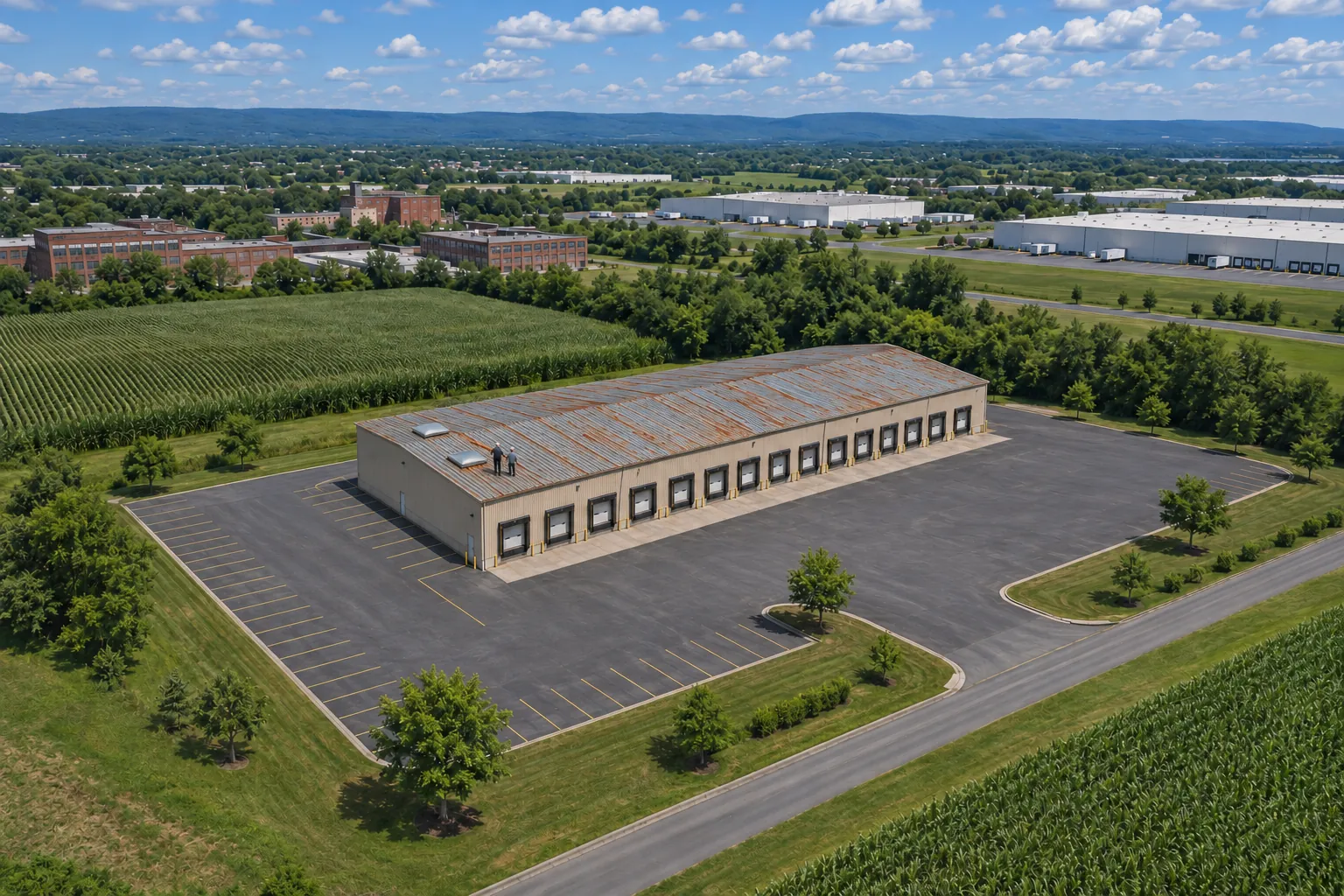
A large metal roof carries thousands of screw penetrations. Sealing each head and covering it with coating removes the most common leak point on these buildings. On older roofs, washers that have hardened in sun and cold are usually the first parts to fail.
Reinforcing fabric across side and end laps ties separate panels into one membrane, so wind-driven rain has no joint to get under. Laps near the eaves get the widest strip, since meltwater and wind push hardest there.
Primer and coating keep moisture off cleaned steel, which slows rust on panels that still have years of strength left in them. Treated rust spots get a second look at every inspection, so new corrosion is caught early.
Coating happens on top of the existing roof, section by section, so tenants, docks, and equipment keep running below. Lifts and material stay clear of entrances, and each section is finished before the next one opens.
Backed-out screws let meltwater into the building. Call us and we will check the fastener lines before the next round of freezing.
Four steps, with the fastener and lap work finished before any coating opens.
Each screw row, lap, and panel end gets checked, rust depth is tested with a scraper, and the deck below drip lines is probed for wet insulation.
Loose and stripped screws are replaced with oversized fasteners, old sealant is cut out of open laps, and fresh sealant and fabric go in.
Pressure washing removes chalk and dirt, scaled rust is ground back, and primer goes on bare and rusted steel before it can flash rust again.
Base and top coats go on at the specified thickness, with extra build at curbs, vents, laps, and the panel ends at the eaves.
Some roofs need a different system, or a second one on another section.
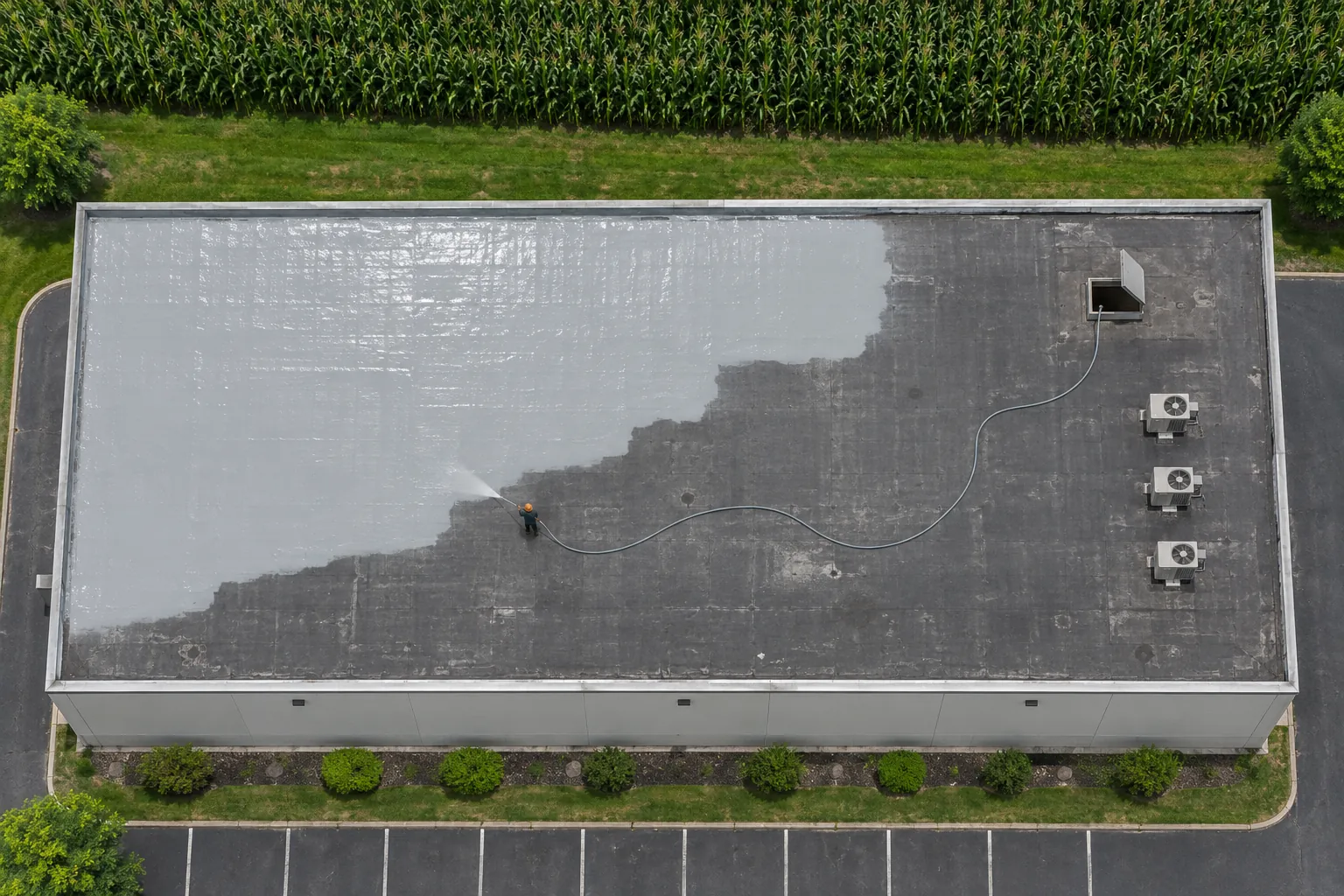
Low valleys and flat sections that hold water after rain call for silicone, applied thick over a tested primer.
Harrisburg Silicone Roof Coating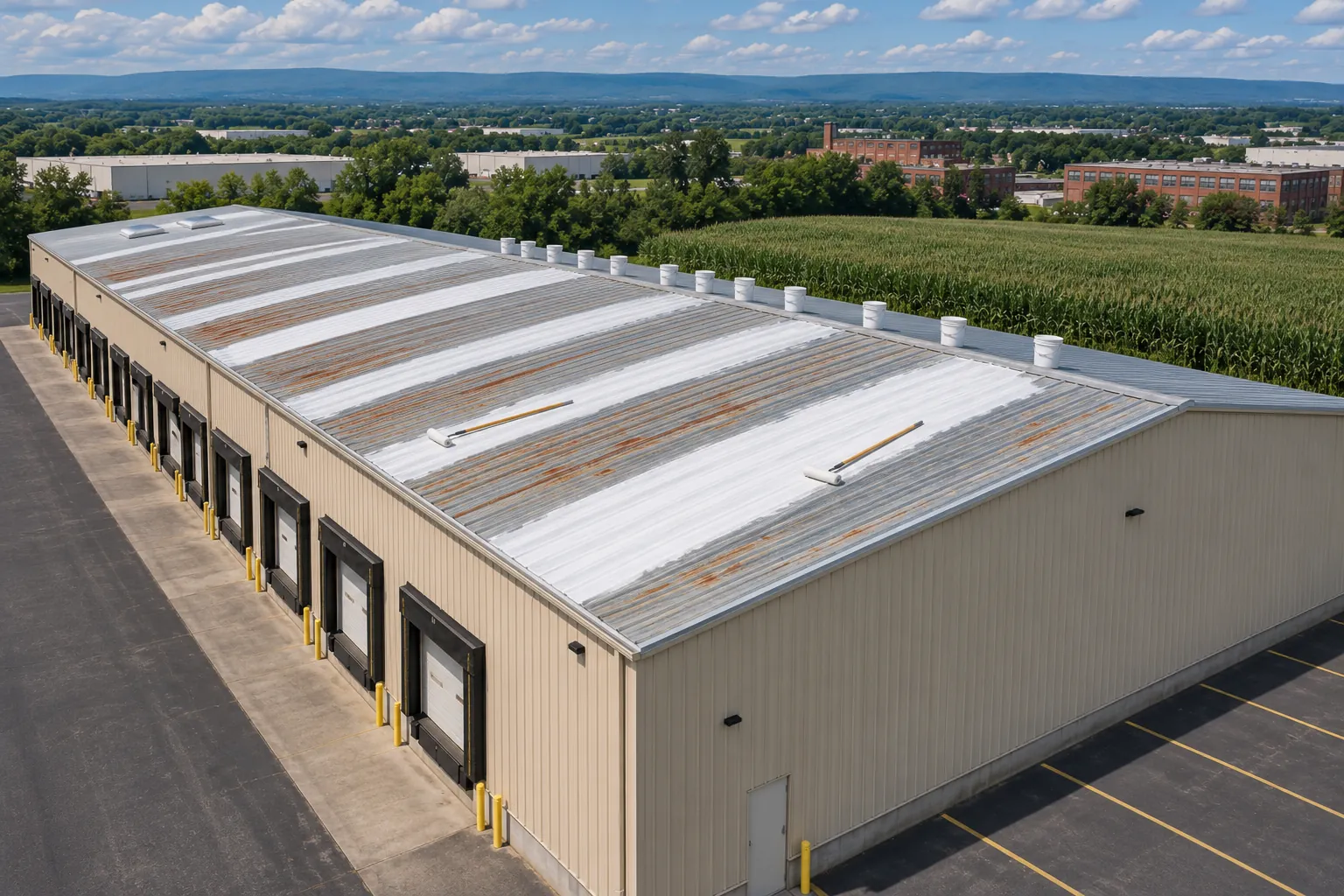
Fast-draining pitched roofs can take an acrylic build with fabric at seams and a bright finish for summer.
Harrisburg Acrylic Roof Coating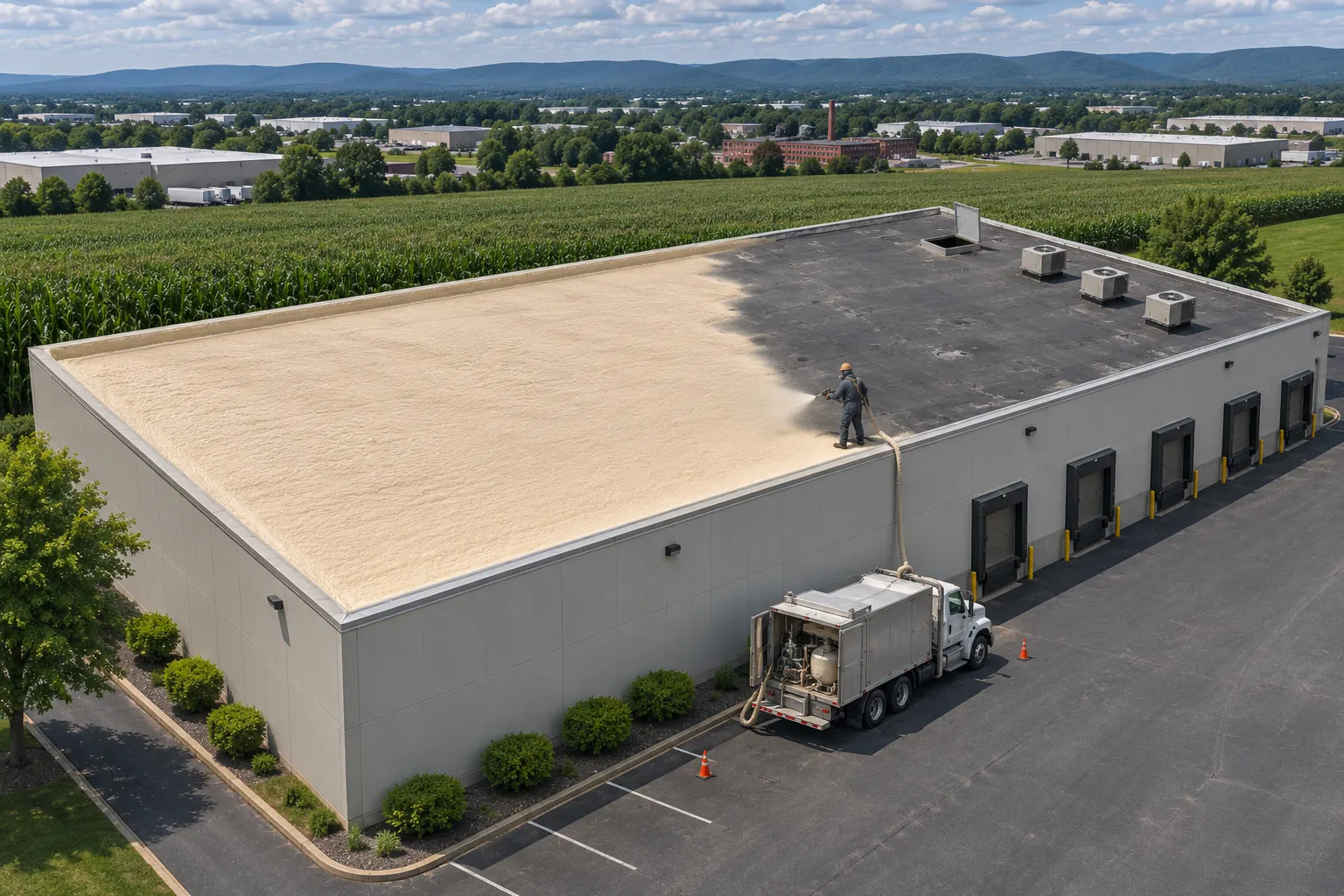
Flat roofs that need insulation get foam sprayed to thickness, then sealed with a protective coating.
Harrisburg Spray Foam Roofing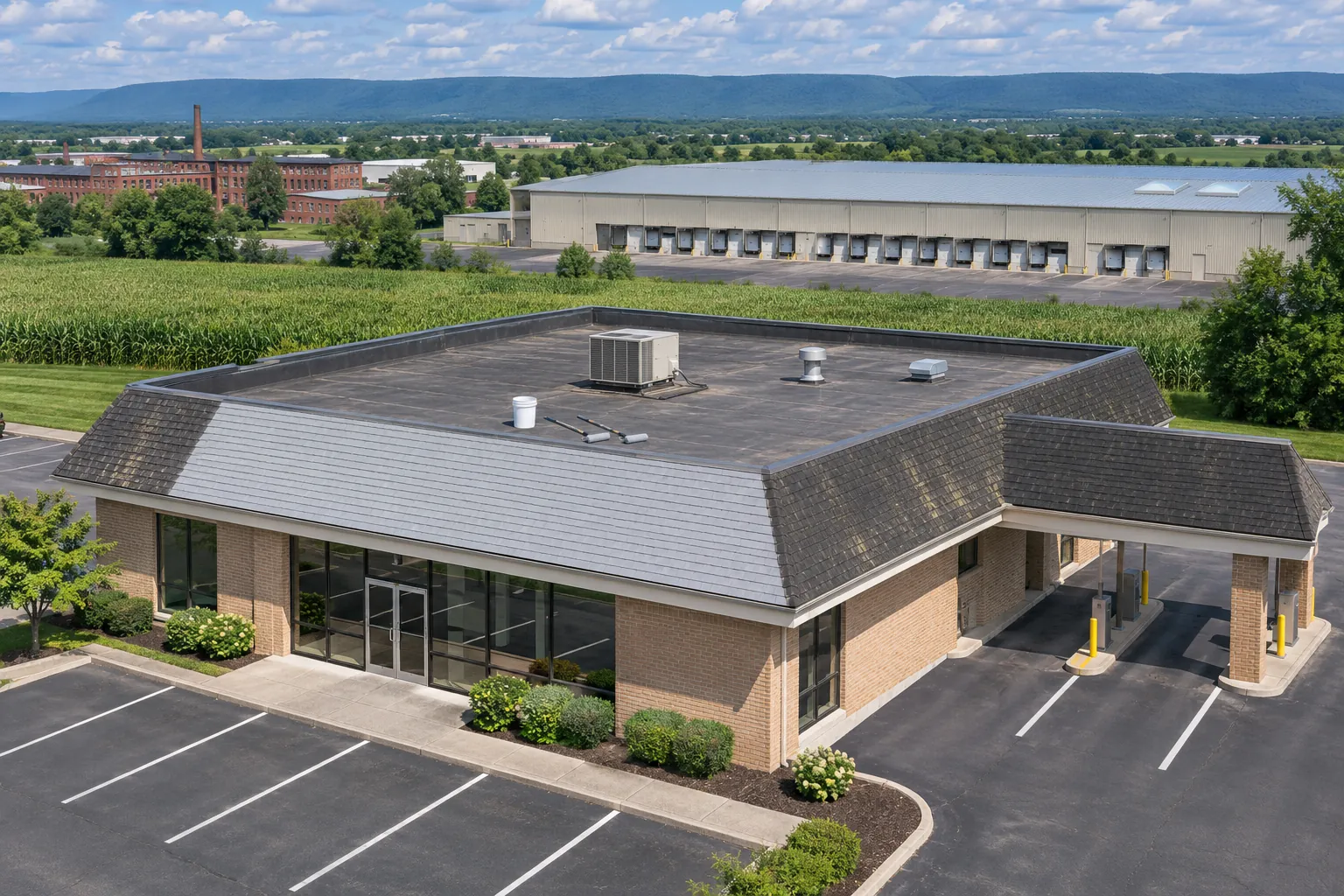
Commercial shingle sections with flat tabs and approval from the maker get a compatible coating after flashing repairs.
Harrisburg Shingle Roof CoatingQuestions owners raise about screws, rust, and system choice.
No, but every screw gets checked. We look for loose connections, cracked or hardened washers, and holes that no longer grip.
Screws that pass stay in place and get sealed under the system, while failed ones are replaced with larger fasteners before any reinforcement or coating covers the connection.
The lap gets opened up enough to judge whether the joint can be saved. Loose corrosion and failed sealant come out, and we check how much metal and attachment remain. A lap with deep rust needs metal work, because a reinforced strip laid over corrosion leaves the panel just as weak underneath.
We also check the ridge and the gutter end of each lap, where water collects and rust usually starts first.
The best coating for a metal roof follows its slope and drainage. Fast-draining pitched panels take acrylic well, low-slope panels with slow spots take silicone, and roofs needing insulation take foam with a topcoat. An adhesion test on the existing finish settles the primer and confirms the choice.
When the comparison is close, we coat a small test area on the actual panels and check adhesion before the full order.
The choice follows the existing finish, the drainage, and conditions around the rooftop equipment. Exhaust from vents, cleaning needs, and adhesion to the current paint all get checked. The plan also covers upkeep, since equipment access and unrepaired leaks damage any coating regardless of the product.
Food plants with washdown exhaust or grease vents get those areas checked closely, since residue weakens adhesion near the outlets.
Yes. Exposed-fastener roofs carry hundreds of screw heads to seal, so fastener work takes most of the preparation. Standing seam panels hide their clips, and the work shifts to seams, end laps, and penetrations. Standing seam roofs also get their clips and end caps checked, because loose clips let panels creep and open the seams.
Coating plans at about $2.50 to $4.00 per square foot of roof, against roughly $5 to $8 to replace it. Fastener counts, rust removal, lap repairs, access, and the number of coats move a job within the range.
Large roofs with good panels sit near the low end, while roofs needing many new fasteners and lap rebuilds move toward the top.
Get a planning range from your roof area, or call and we will walk the screw lines and laps with you.