
Drainage
Low Laps That Hold Water
Water-based acrylic softens under standing water. Low laps and gutter ends that stay wet get corrected or switched to another product.
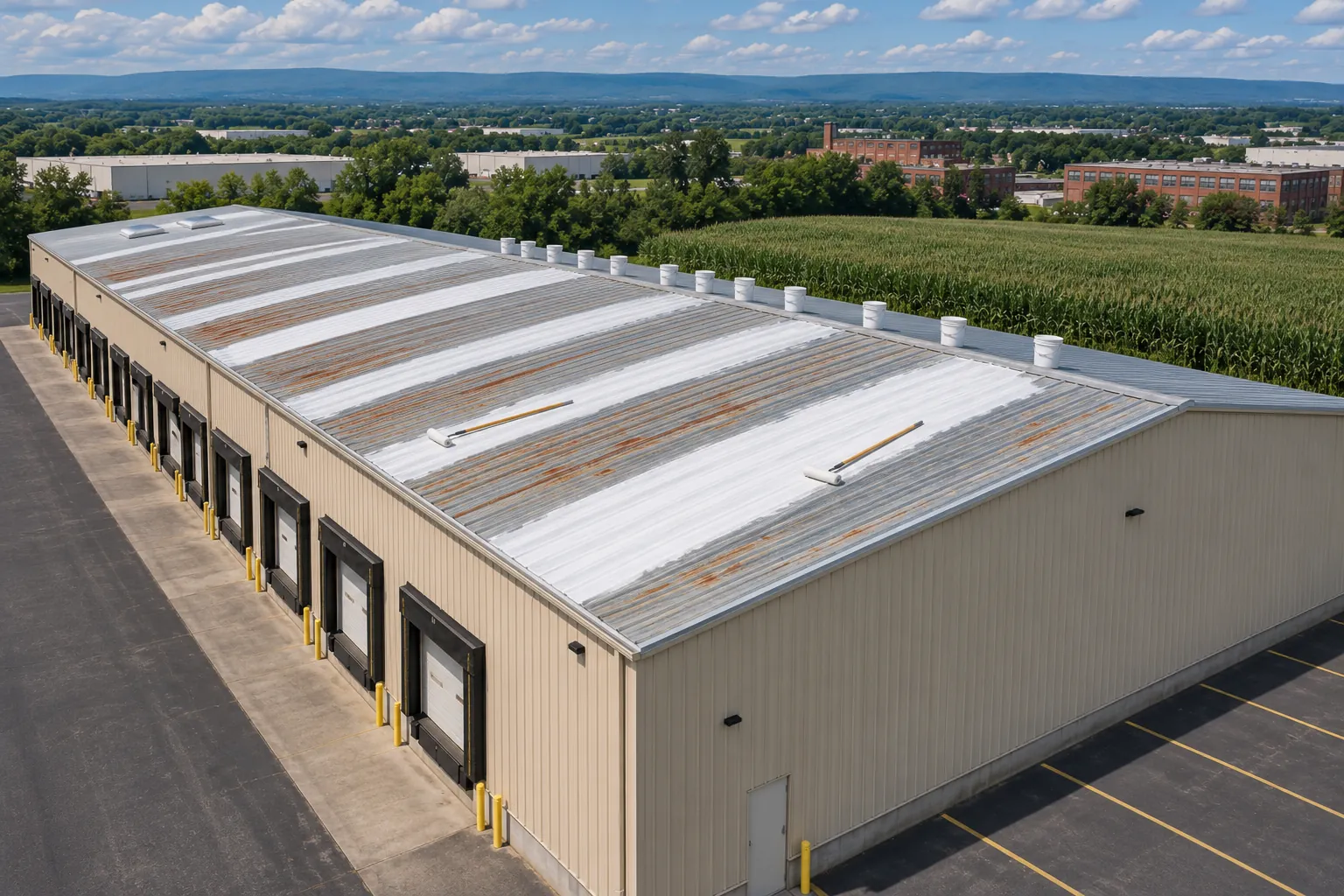
Harrisburg acrylic roof coating from us goes on sloped metal and well-drained commercial roofs, built up in coats with fabric at seams and applied in dry weather.
Harrisburg acrylic roof coating suits roofs that shed water fast. Here is how to tell.
Acrylic depends on clean, dry, well-drained surfaces. These four problems get handled first.
Water-based acrylic softens under standing water. Low laps and gutter ends that stay wet get corrected or switched to another product.
Rust spots are cleaned to firm metal and primed, because acrylic over loose rust lifts within a season.
North faces and areas under equipment stay damp longer each morning. We test them for moisture before opening material.
Loose or blistered coating is scraped back to a firm edge, and the remaining layer is tested for adhesion.
Acrylic systems vary by surface and by how much sun and rain the roof takes.
Ribbed and standing seam panels get rust primer, fabric at laps and screws, and two or more acrylic coats. Panel ends at the eaves get extra coating where water leaves the roof.
Thicker elastomeric acrylics stretch with panels through summer heat and winter cold, and suit long, pitched runs. Expansion details at ridges and end laps get extra fabric on these long runs.
Worn acrylic roofs in good condition get cleaned, spot repaired, and recoated to restore thickness. Thin spots and bare ribs get spot primed and coated before the full recoat.
A bright white top layer keeps metal surfaces cooler on summer afternoons and shows wear clearly during inspections. The white topcoat goes over a tinted base coat so missed spots show during application.
Acrylic gives sloped roofs a bright, protective surface at a lower material cost.
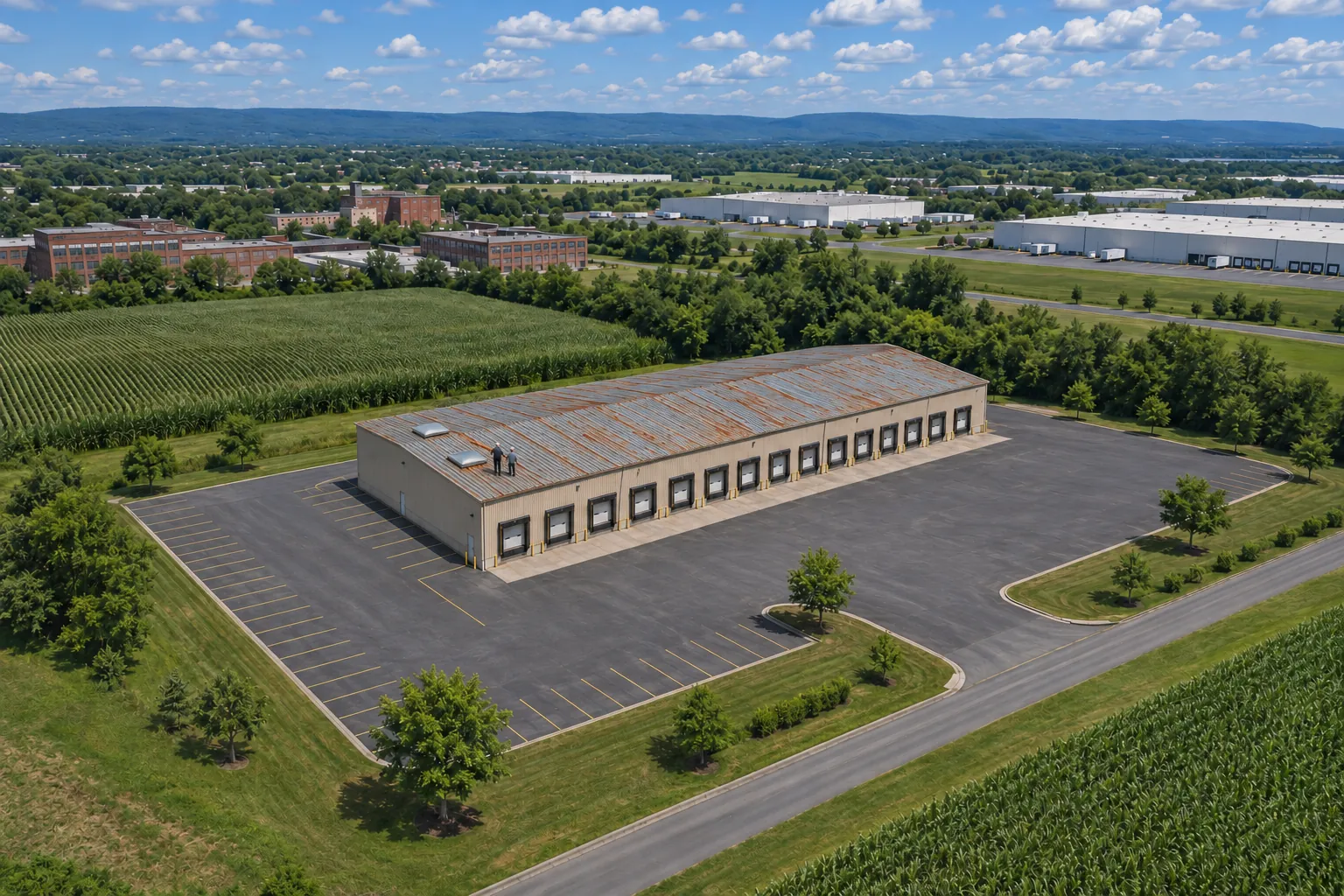
White acrylic reflects much of the summer sun, so metal panels stay cooler and expand less on hot afternoons. The effect is strongest on long south-facing slopes that bake through the afternoon.
Acrylic lets small amounts of vapor pass, which helps on roofs where some moisture moves up through the assembly. Vapor that does pass through leaves without lifting the film off the panel seams.
Worn acrylic accepts a fresh acrylic coat after cleaning, which keeps future maintenance simple. A cleaned and recoated roof keeps its original fabric at seams and fasteners in place.
Seams, screws, and laps get polyester fabric bedded in coating, giving the leak points extra strength. Fabric is set into wet coating so it bonds into the film instead of sitting on top.
Acrylic needs dry days to cure. Call us early in the season and we will set dates around the forecast and your building schedule.
Four steps, each one timed around temperature, humidity, and rain.
Panels, laps, screws, and gutters get walked, and we note where water lingers and which sections stay shaded and damp.
Washing removes dirt and chalk, rust is cleaned to firm metal, and primer goes on wherever bare or rusted steel shows.
Polyester fabric is set into wet coating over laps, screw rows, and curb flashing so these joints carry a reinforced layer.
Two or more acrylic coats go on, each after the one below has dried, until the film reaches the specified thickness.
Where acrylic falls short, another system usually fits.
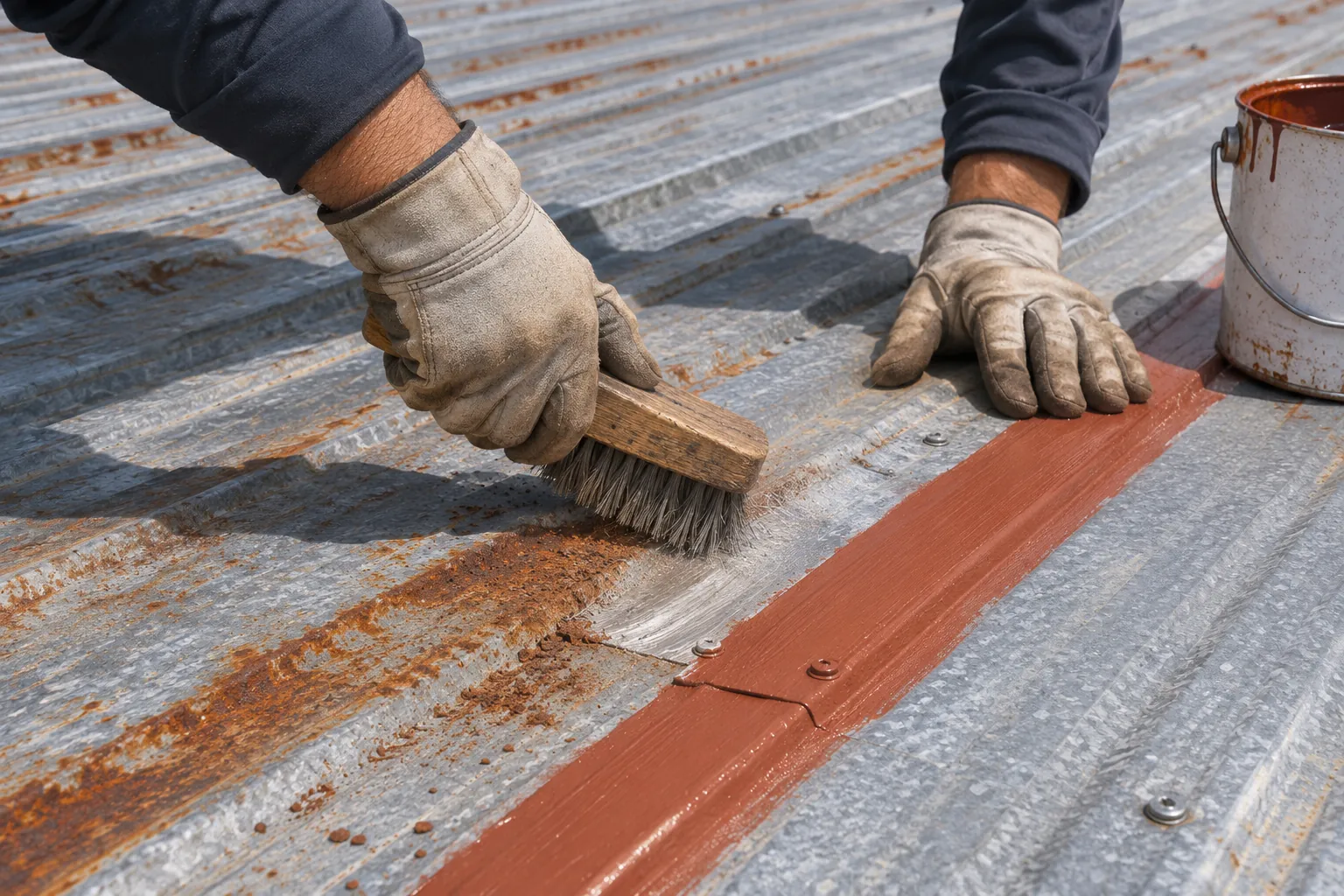
Our main service seals screws and laps on steel roofs and coats them as one surface.
Harrisburg Commercial Metal Roof Coating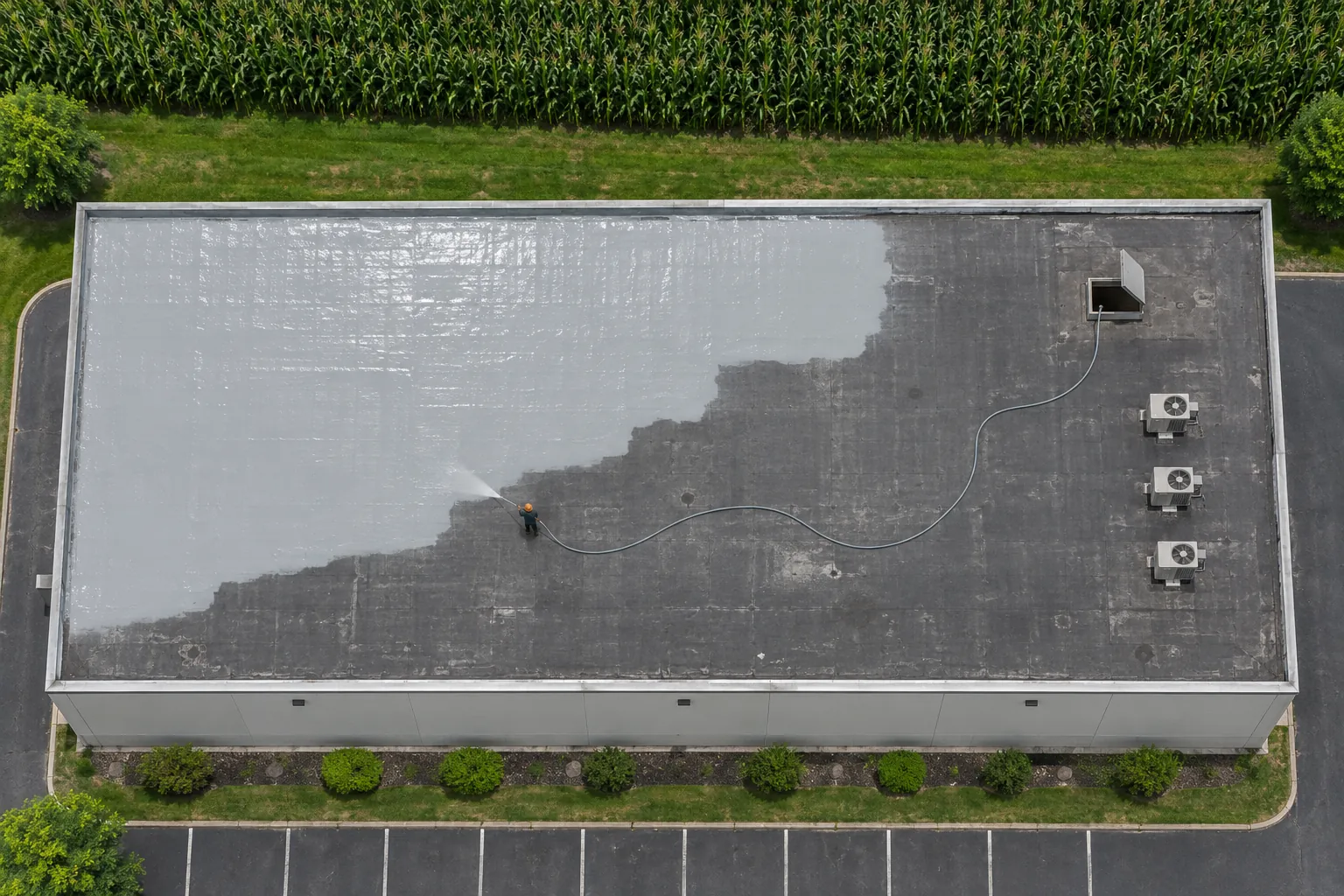
Flat areas and valleys where water sits get silicone, which handles ponding better than acrylic.
Harrisburg Silicone Roof Coating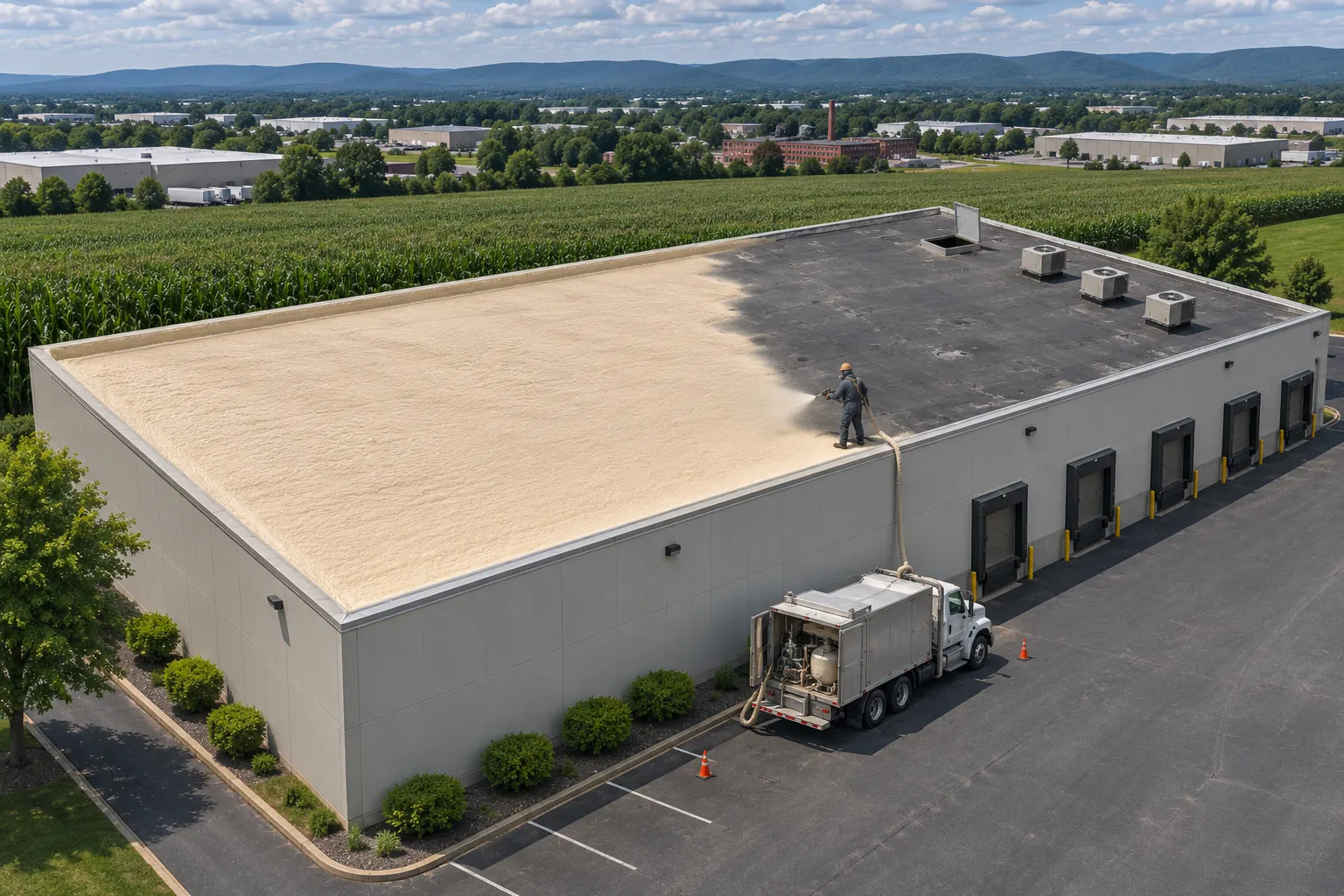
Insulating foam covers flat roofs in one sprayed layer, with acrylic or silicone as the protective topcoat.
Harrisburg Spray Foam Roofing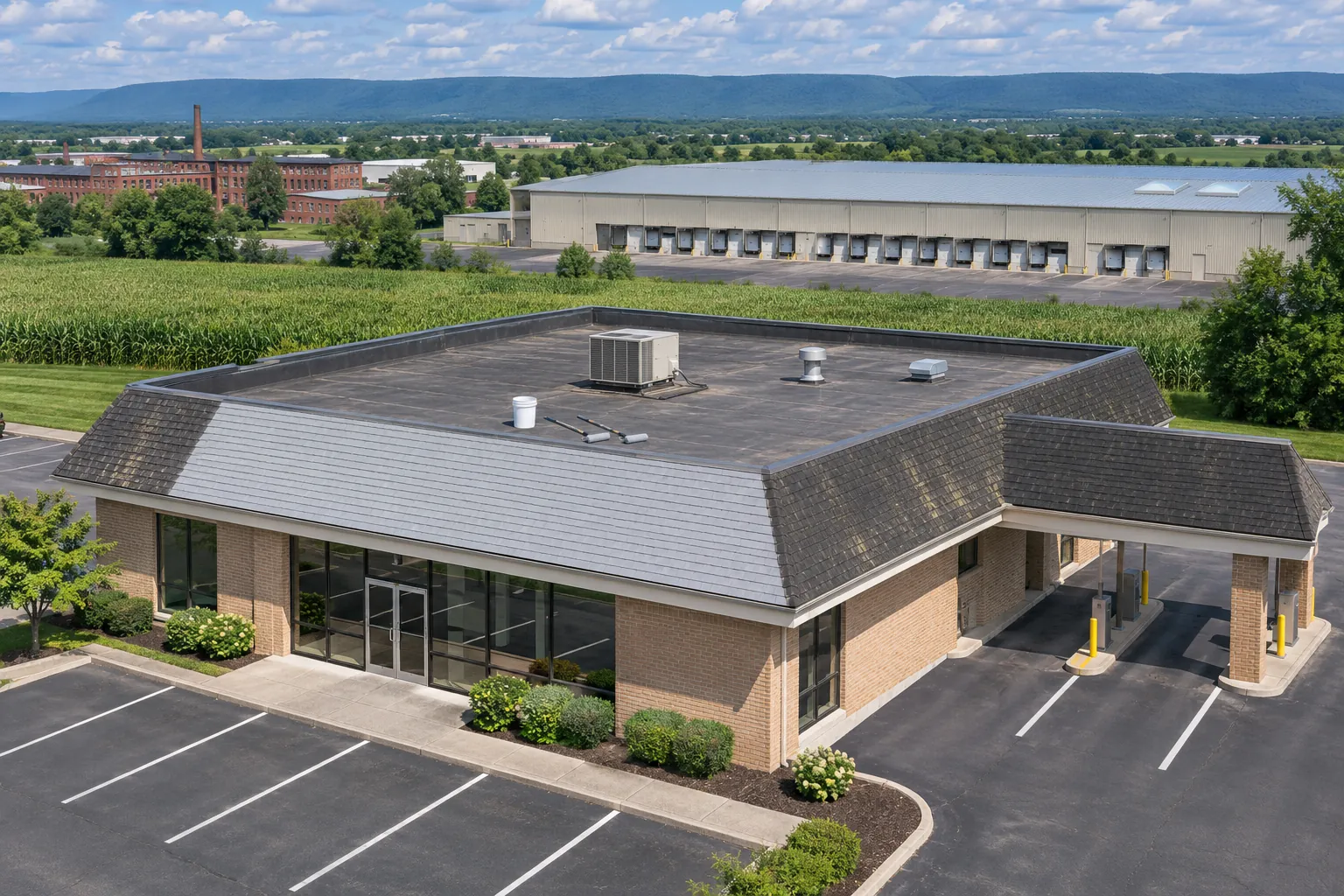
Approved coatings protect flat, attached shingles on commercial mansards and roof faces.
Harrisburg Shingle Roof CoatingCommon questions about acrylic coatings and weather.
Acrylic needs the roof surface within the product's temperature and moisture limits. Dew sits on laps and shaded panels well into the morning, so we check moisture, humidity, and the rain forecast before opening any pails.
Starting on a wet surface leaves the coating without a proper drying period.
Acrylic softens under standing water, needs mild and dry weather to cure, and wears faster where people walk. On a well-drained pitched roof those limits rarely matter. On flat roofs with ponding, silicone or another system usually serves better. Seams and screw rows with fabric bedded in hold up better along the edges that wear first.
That depends on thickness, drainage, sun exposure, and traffic. A properly built film on a well-drained metal roof wears slowly and shows its age through chalking and thinning. Periodic cleaning, spot repairs, and a recoat when thickness drops extend the system well beyond a single coat.
Coatings applied at full thickness with fabric at every lap show their age slowly along the panel ribs.
Two or more, depending on the required finished thickness, primer needs, and the surface profile. Each coat has to dry before the next, and seams and screws get fabric reinforcement apart from the broad field coats. The panel profile also matters, since deep ribs take more material to reach the same film thickness on every face.
Not necessarily. We compare the worn path with coating wear and adhesion across the rest of the roof. If the field is in good shape, local repair and protection along that path can be enough. Spot repairs along the path use compatible acrylic and a walk pad where crews step most.
Yes, once the rust is cleaned to firm metal and primed. Acrylic applied over loose rust peels quickly, so preparation decides the result more than the coating does. Fasteners and laps get sealed under fabric before the first coat, so the most common leak points are covered twice.
Get a range for an acrylic system from your roof area, or call to book an inspection before the season fills.