
Ponding
Water Sitting In Valleys
Before silicone covers a wet valley, the outlet gets cleared and the cause of the low spot gets identified, whether debris, a crushed drain, or sagging deck.
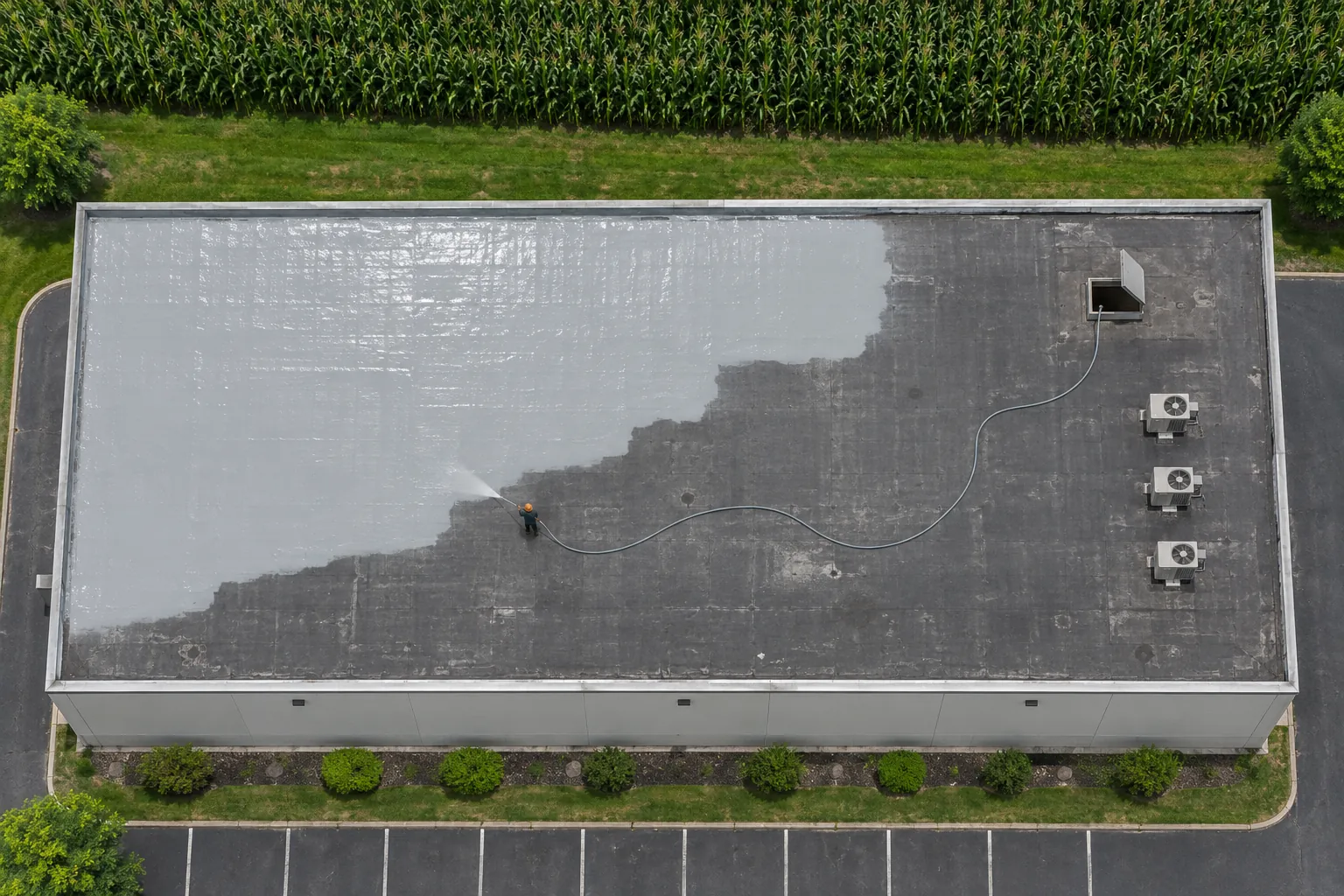
Harrisburg silicone roof coating from us goes on flat and low-slope commercial roofs, over metal or membrane, after the drainage problem behind any ponding is found.
Harrisburg silicone roof coating fits low roofs with slow drainage and light traffic. Check your roof against both lists.
Silicone bonds poorly to dirt and loose material, so these conditions get handled first.
Before silicone covers a wet valley, the outlet gets cleared and the cause of the low spot gets identified, whether debris, a crushed drain, or sagging deck.
Lifted seams on single-ply or bitumen roofs are cleaned, re-adhered or welded, and reinforced with fabric set in silicone before the field coat.
Spongy areas point to wet insulation. Core samples confirm it, and wet boards come out before any coating traps the moisture.
Grime and chalk keep silicone from gripping. Pressure washing and a pull test on the cleaned surface decide whether a primer goes down first.
Silicone goes on several roof types. The surface underneath sets the primer and the film thickness.
Shallow-pitch metal roofs get rust treatment, fastener sealing, and a primer before silicone goes on in one or two passes. Exposed screw heads get sealed individually before the silicone field coat.
Aged TPO, EPDM, or modified bitumen roofs take silicone after seam repair and a pull test to confirm the right primer. Seams and laps on these membranes get fabric in silicone before the field coat.
Sprayed foam roofs get silicone as the protective layer that shields the foam from sunlight and weather. Foam roofs with silicone topcoats are recoated with silicone as the film wears.
Walk paths to rooftop units get granules broadcast into wet silicone for grip and a tougher wearing surface. Paths are laid out with your maintenance team so they follow the real routes to equipment.
Silicone earns its place on roofs where water stays longer than it should.
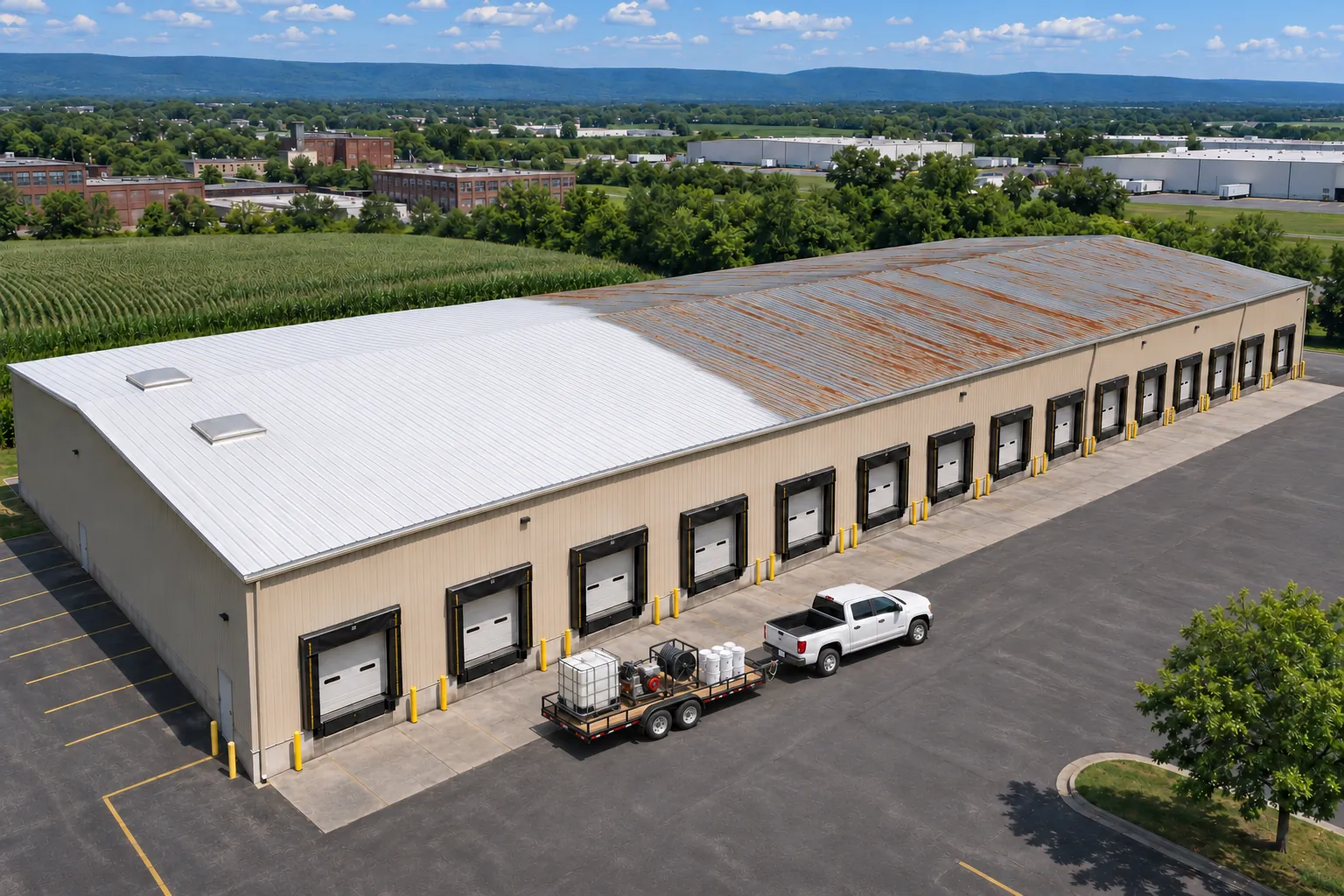
Cured silicone resists breakdown under ponding better than water-based coatings, which matters on flat sections where rain sits after storms. Drains still need to work, so outlets get cleared before the coating goes on.
Silicone builds high thickness in few passes, covering seams, fasteners, and old patches with one continuous layer. Old patches and fastener heads disappear under the same continuous layer as the field.
The film keeps its flexibility through summer sun and winter cold, so it moves with the roof instead of cracking at joints. That flexibility matters at curbs and laps, where most cracking starts on stiffer coatings.
White and light gray silicone reflect sunlight, keeping the roof surface cooler than dark membrane or weathered metal on hot days. A cooler surface also means less heat stress on seams and flashing over a summer.
Start with a planning range for silicone, and we will trace why the water stays when we inspect the outlets and valleys.
Silicone work follows four steps, with adhesion testing built into the second.
We map ponding areas, open seams, soft spots, and drains, and take core samples where moisture readings point to wet insulation.
Pressure washing, seam repair, and drain clearing come first, then a small pull test on the clean surface decides whether a primer is needed.
Seams, curbs, drains, and penetrations get fabric set in silicone before the field coat, so the weakest spots carry the most material.
Silicone goes on at the specified thickness in one or two passes, with wet-film gauge checks across the roof as the crew works.
Roofs that drain fast or need insulation take a different system.
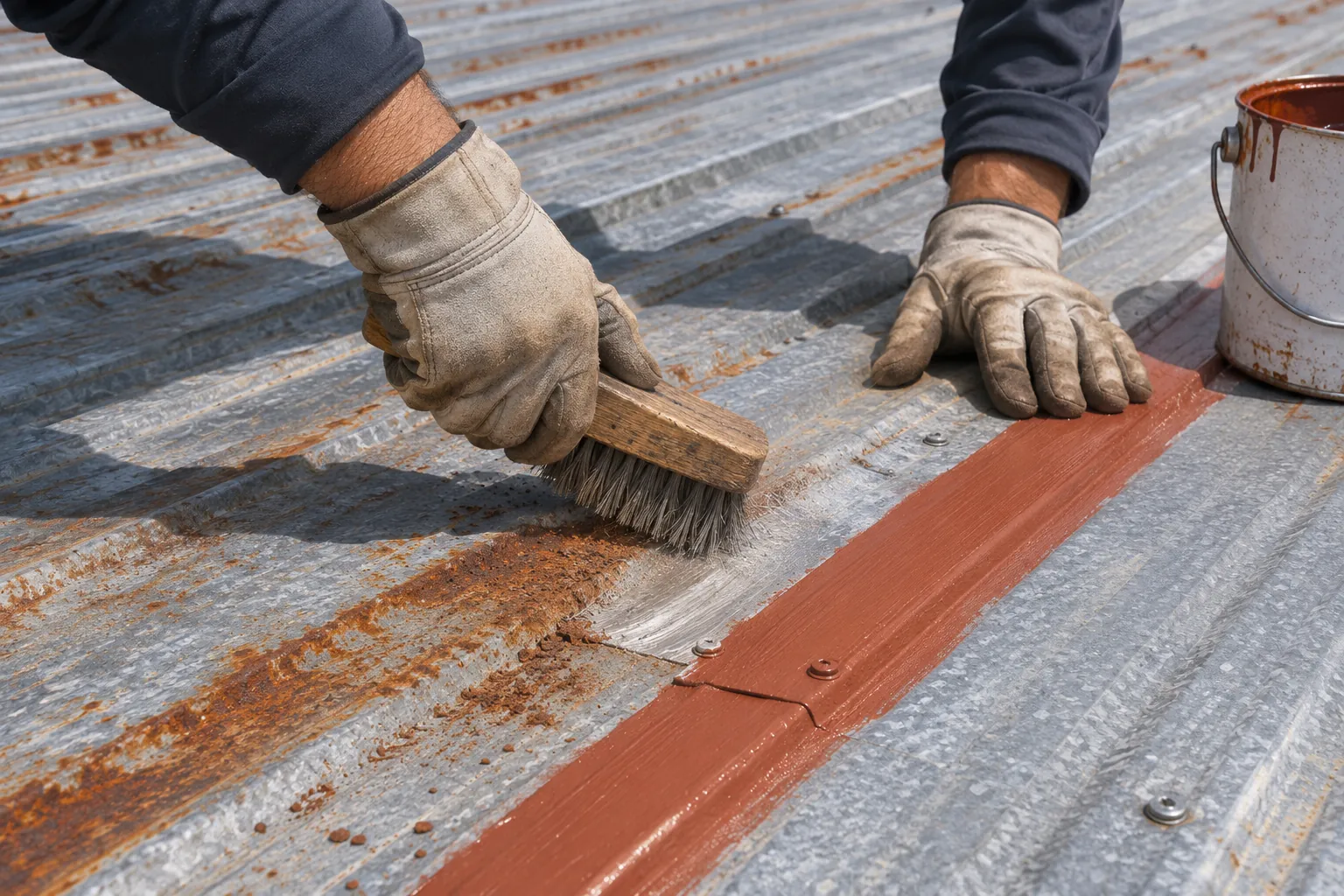
Screw-down steel roofs get fastener sealing, rust treatment, and a two-coat system that bridges every lap.
Harrisburg Commercial Metal Roof Coating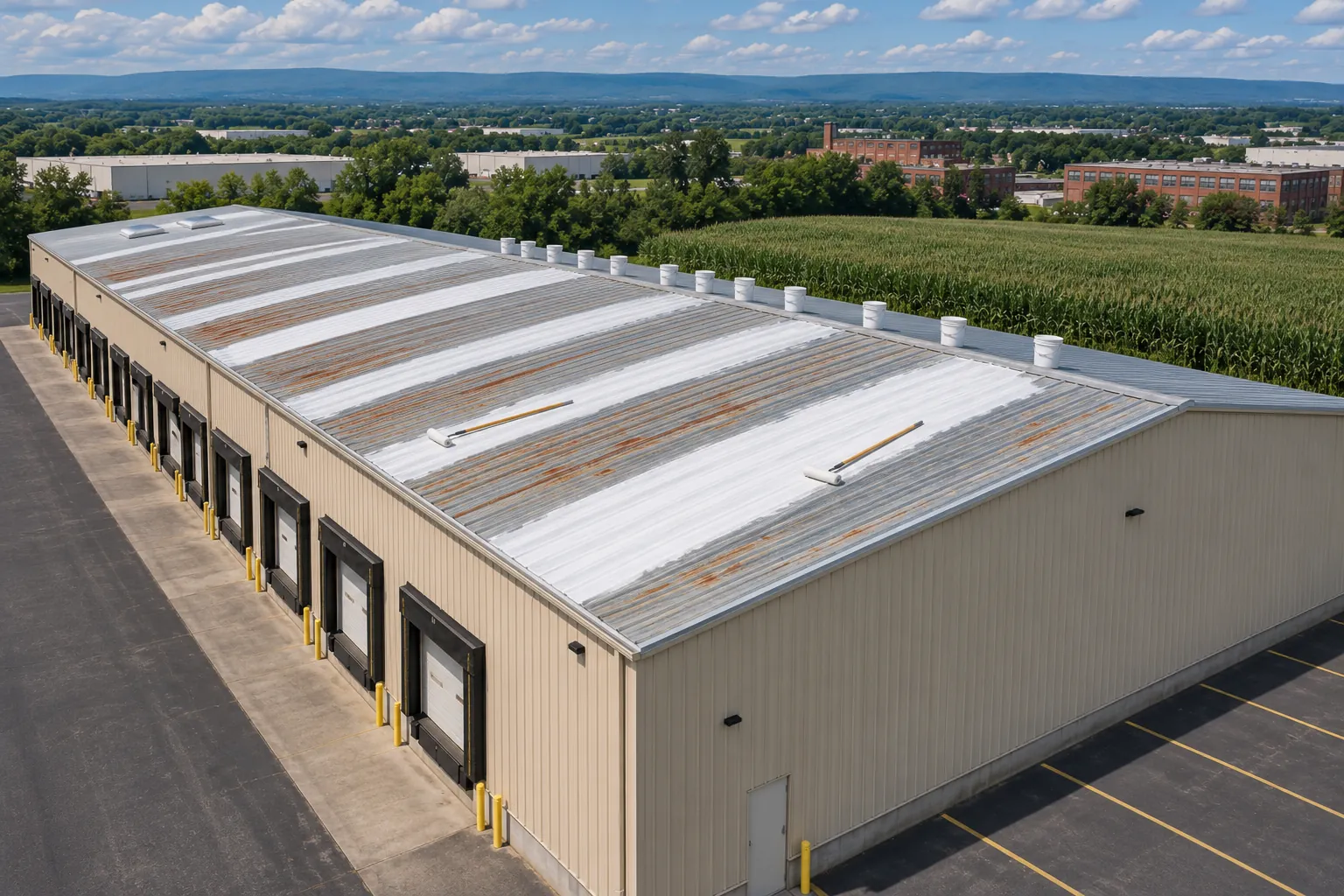
Pitched roofs that shed water quickly take acrylic in lighter coats with fabric at the seams.
Harrisburg Acrylic Roof Coating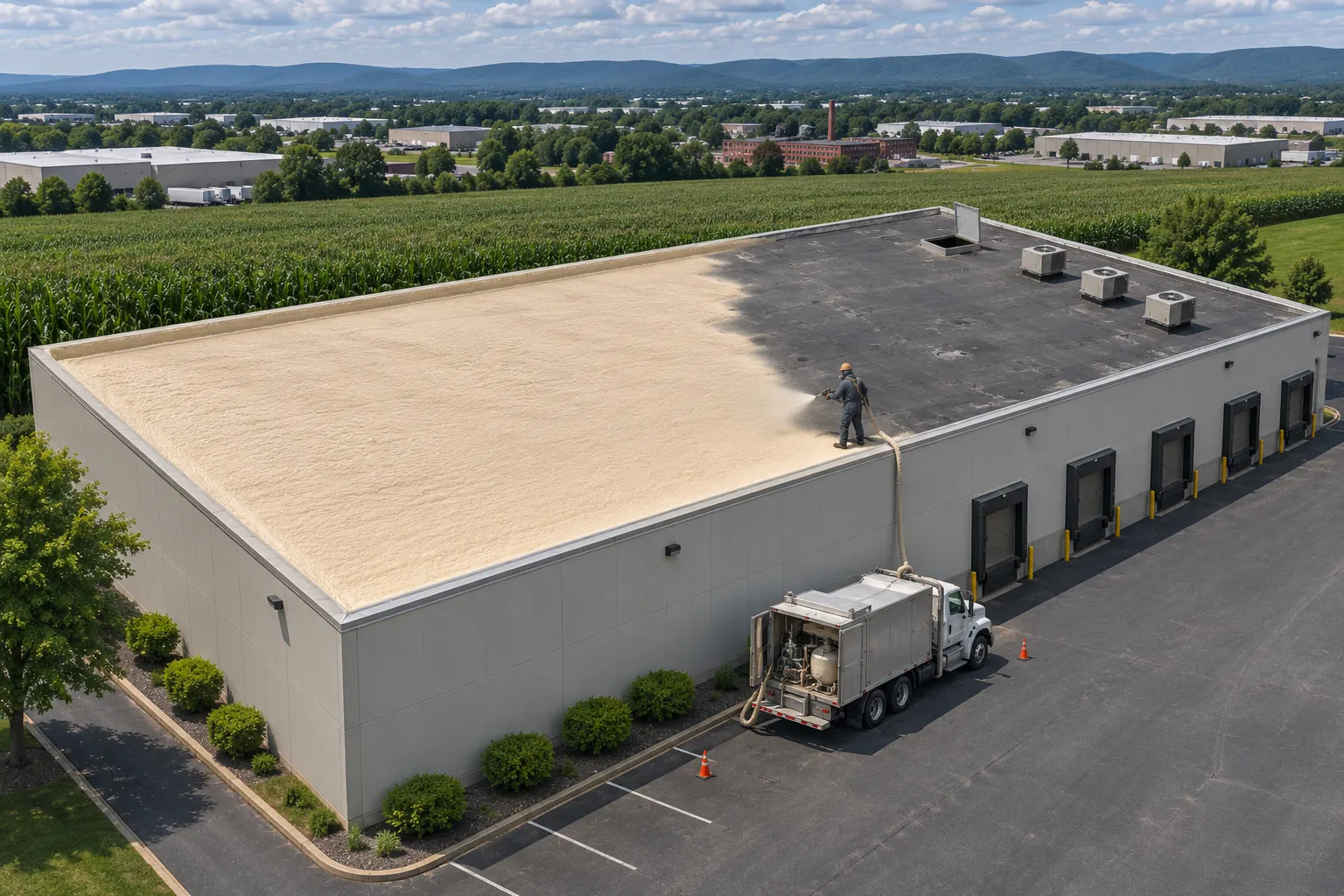
Spray foam adds insulation and slope on flat roofs, and silicone is often its topcoat.
Harrisburg Spray Foam Roofing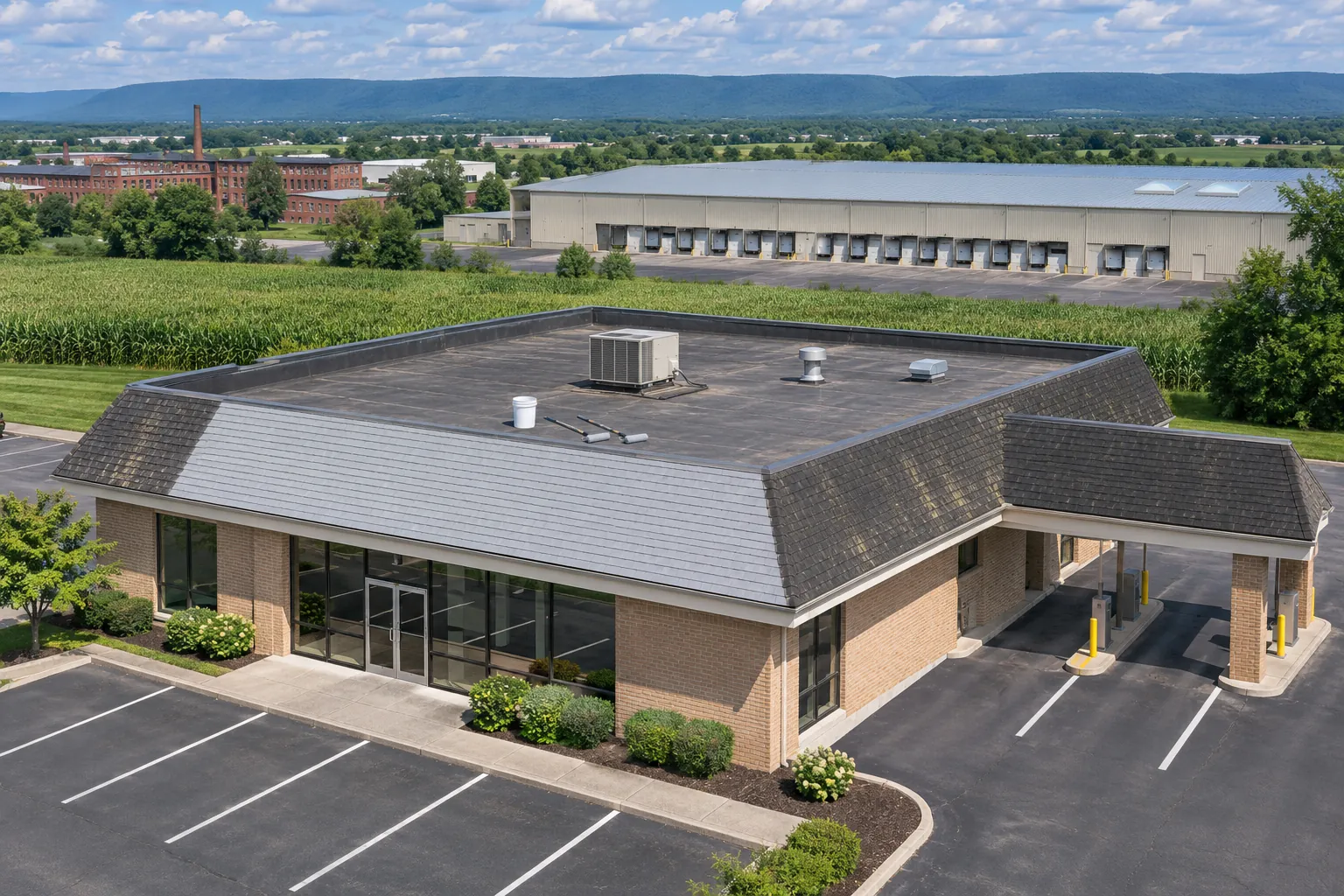
Shingle mansards and roof faces on offices take a coating approved by the shingle maker.
Harrisburg Shingle Roof CoatingOwner questions about silicone, answered for low and flat roofs.
Silicone picks up dirt, turns slick when wet, and accepts repairs only from silicone or products made for it. Near maintenance routes, foot traffic and dropped parts wear it faster, so we plan walk paths and protection around equipment.
Keep the product records, because future crews need to know a silicone surface is up there.
Most roofs get one or two passes to reach the thickness the manufacturer specifies. Extra coats past that number add cost without adding much life. What matters is preparation, detail reinforcement between coats, and a surface that holds the coating, since thicker film cannot fix weak panels or poor drainage.
Valleys and drains get extra material, since that is where standing water sits longest.
Silicone handles lingering water better than most acrylics, so it is the usual pick for slow valleys. We still compare each product's water-exposure limits and find out why the valley holds water. A blocked outlet or a sagging structure needs fixing whichever coating goes on.
Drains get unclogged and outlets checked for size during the same visit, before any coating is ordered.
Life depends on film thickness, the surface underneath, and traffic. A properly built silicone film on a clean, dry roof lasts far longer than a thin coat over dirt. Inspections after storms and quick repairs at service paths extend it, and silicone accepts a fresh silicone recoat once cleaned.
Granules broadcast into the top layer along walk paths add grip and slow wear where technicians step.
Cooler temperatures suit silicone better than acrylic, but the roof has to be dry, free of frost, and above the product's minimum. Short winter days and morning dew still shorten the working window, so most silicone work here runs spring through fall. We avoid days when dew will settle on fresh silicone before it skins over.
It can, after cleaning and a pull test. Silicone over acrylic is common when ponding shows up later, but the acrylic has to be firmly attached. Loose acrylic gets removed, and a primer is chosen from the test result. Silicone over silicone works well too, once the old surface is scrubbed and rinsed.
Price a silicone job from your roof size, or call to have the valleys, seams, and drains checked.